Archives par étiquette : Charlotte Lagro

Charlotte Lagro, Suchan Kinoshita, Four times two, Bonnefantenmuseum, Maastricht

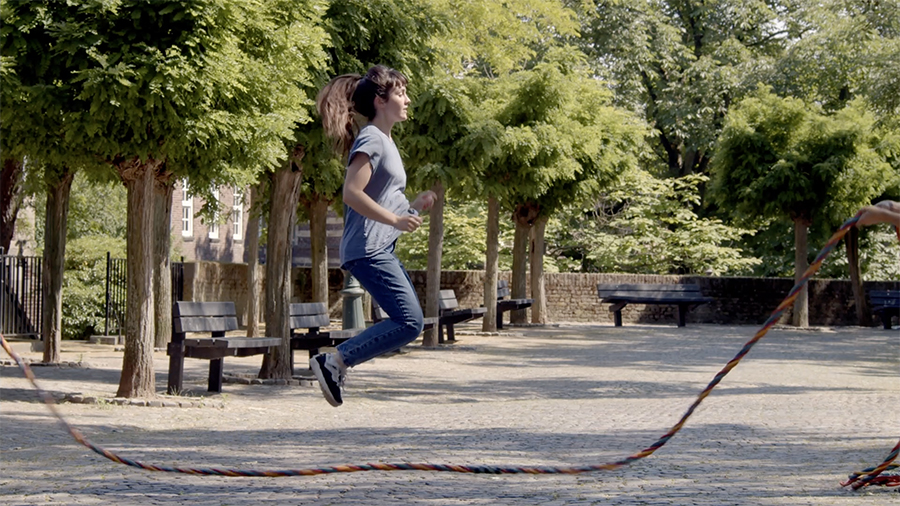
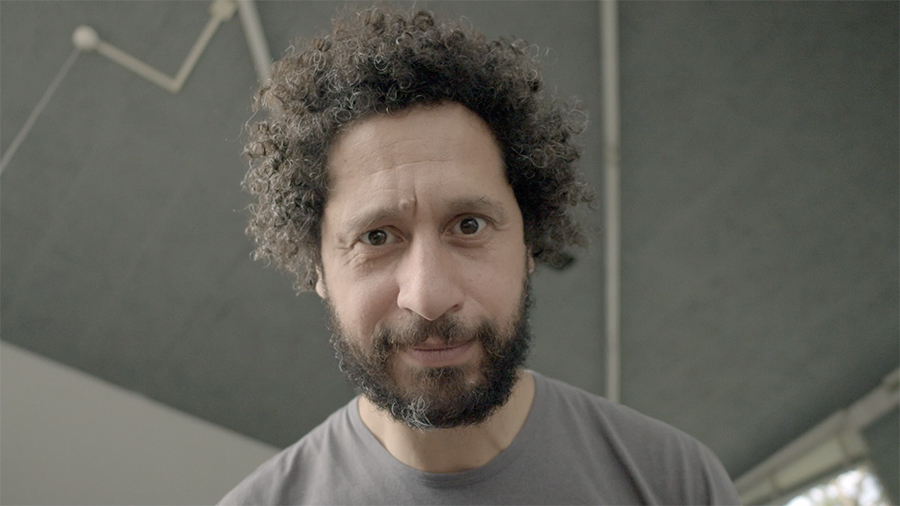
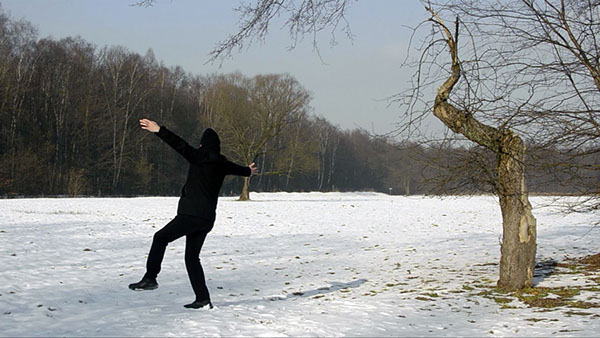
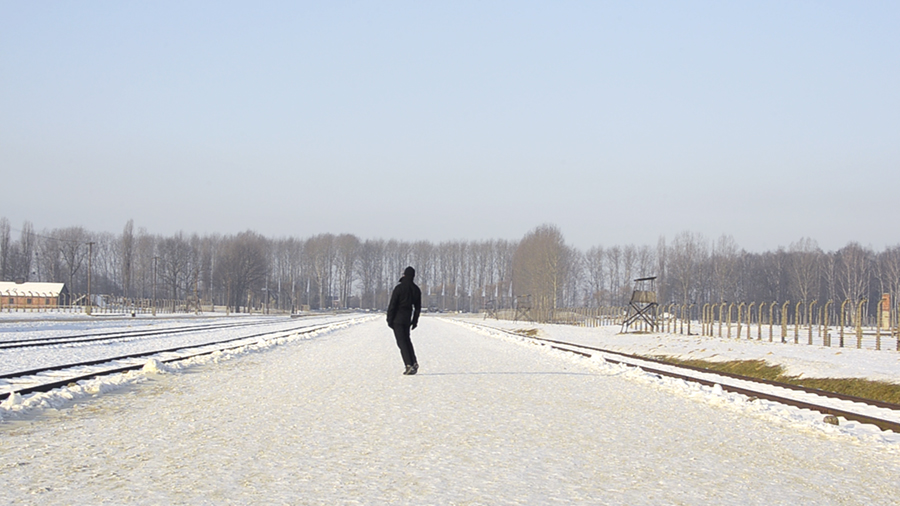
Charlotte Lagro, The Art-shaped Hole in My Heart (still), 2015, film, 10 min 6 sec. Collection Bonnefanten

Charlotte Lagro et Suchan Kinoshita participe à l’exposition Four times two, nouvelle présentation de la collection au Bonnefantenmuseum à Maastricht. A voir jusqu’au 14 juin 29026. Commissaire : Paula van den Bosch. 

The exhibition Four times Two invites you to unravel the way that artworks are connected  to one another and to the visitor. This collection presentation of contemporary art covers half a century, and presents various generations of artists and art movements. The acquisition of Shinkichi Tajiri’s iconic artwork of four knots, Four times Two (1967), in 2024, formed the trigger and the starting point for this presentation. 

Four times Two by the Japanese-American-Dutch artist Shinkichi Tajiri (Los Angeles, 7 December 1923 – Baarlo, 15 March 2009) is both personal and fascinating. Tajiri’s exposure to racism and exclusion had a decisive influence on his life and work. As a young man, he experienced war and hatred, and he yearned for solidarity. Tajiri’s distinctive knot is a recognisable symbol of connection and unity all over the world. Bringing people together, however, is no easy task. It requires courage and an environment that does not recoil from things that are different or unfamiliar. And not everything can be solved just like that. Shinkichi Tajiri’s knot stands for that as well: the world is complex and confusing, and human relationships are often complicated.

Each room shows work by four artists: the number of knots in Four times Two. The works are all very diverse with regard to their subject, theme or appearance. So the question is: what do they have in common? To give a suggestion or clue, each room has a title, like: rhythm & transformation or time & gravity. But everyone looks at things differently and makes different connections. The exhibition is therefore mainly an invitation to go in personal search of the underlying ideas, emotions, messages or symbolism that connect these artworks, across time and cultural differences, both to each other and to us.

Four times Two brings together works by leading international artists in a surprising way. Under the heading engagement & desire, for example, you see work by Lydia Schouten, a pioneer in the field of performance, video and installation art, and an important figurehead of feminism. Her work enters into dialogue, as it were, with that of the Swiss artist Thomas Hirschhorn, who is known for his installations and collages made of disposable materials. Both Schouten and Hirschhorn are renowned for their engaged work, but they express their interaction with everyday social and political issues in totally different ways. In the abstraction & illusion room, the abstract ‘wave’ painting by Mary Heilmann is exhibited alongside Sonne Vaassen’s realistic video with highly illusionistic content.

Four times Two includes works by: Francis Alys, Paul Chan, Peter Doig, Mary Heilmann, Thomas Hirschhorn, Suchan Kinoshita, Jos Kruit, Mario Merz, Charlotte Lagro, Sol LeWitt, Laura Owens, Roman Signer, Carol Rhodes, Lydia Schouten, Shinkichi Tajiri, Sonne Vaassen, Luciano Fabro, Paloma Varga Weisz and Richard Serra.

Suchan Kinoshita, Hok I, 1996, wood, glass, metal, 300 h x 180 w x 250 d cm. Bonnefanten Collection, acquired with support from the Mondriaan Fund.

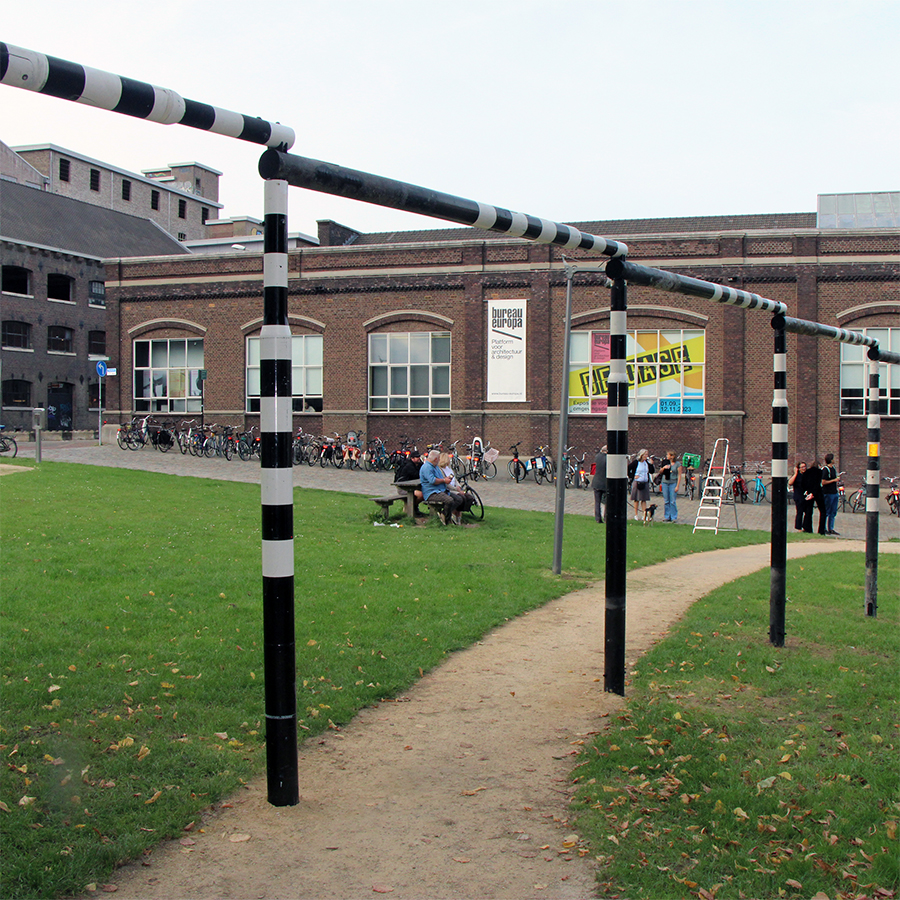
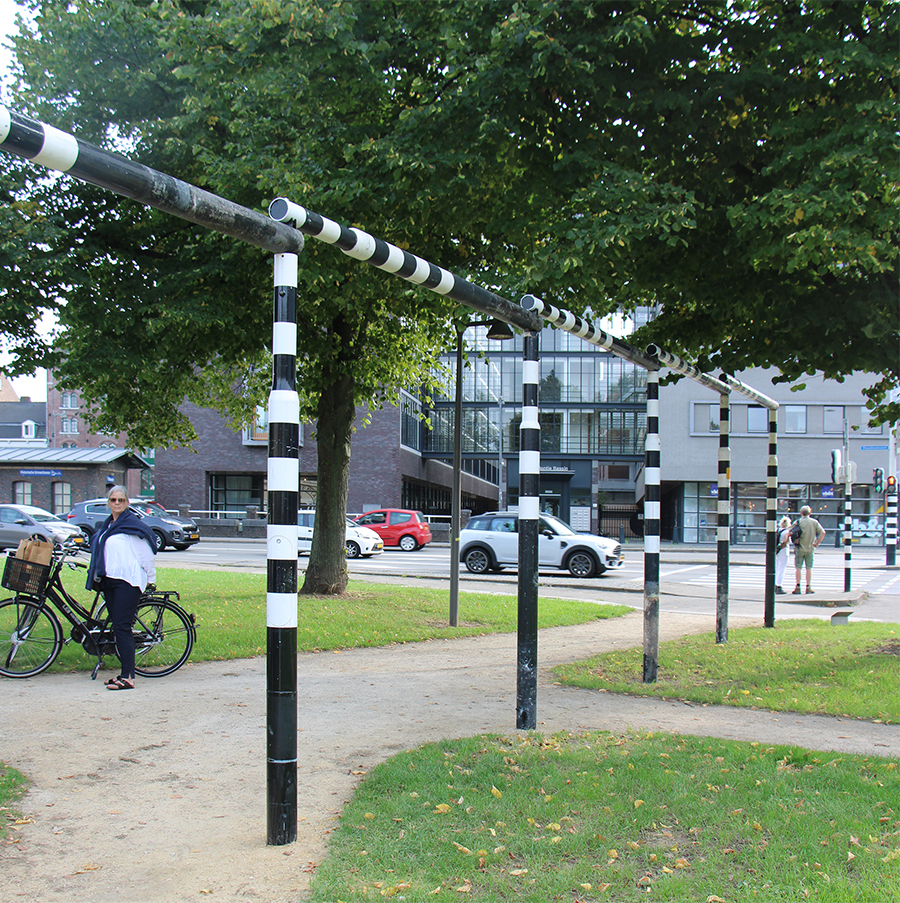
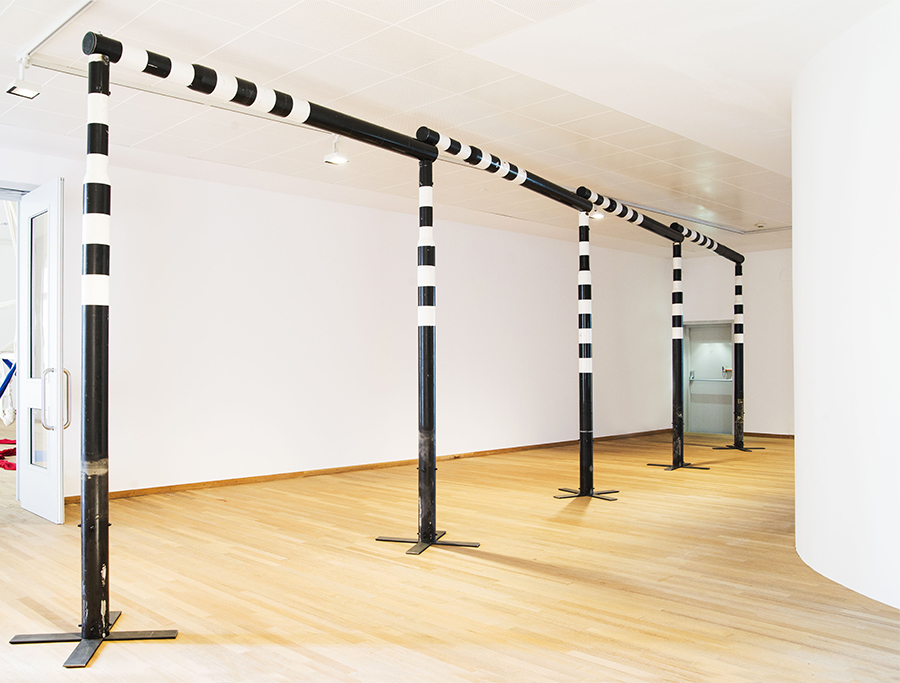
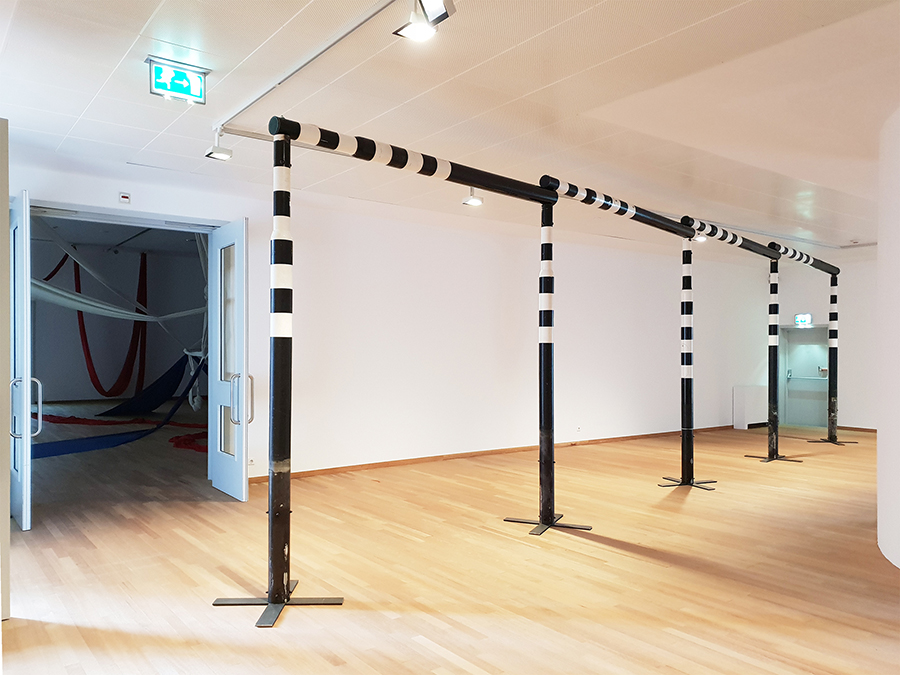
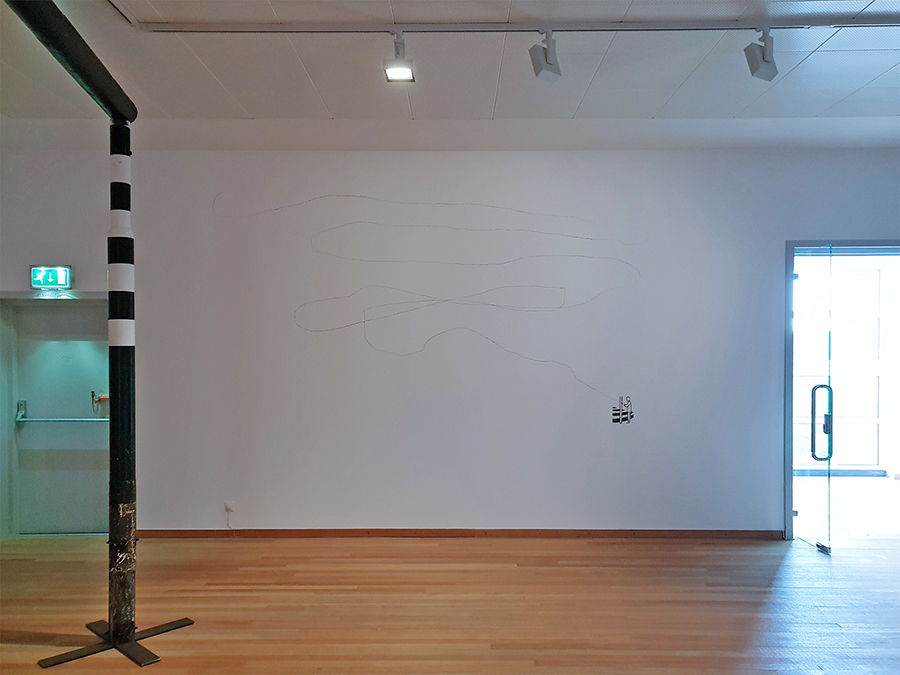
Charlotte Lagro, Zachtloper, Maastricht, Sphinxkwartier

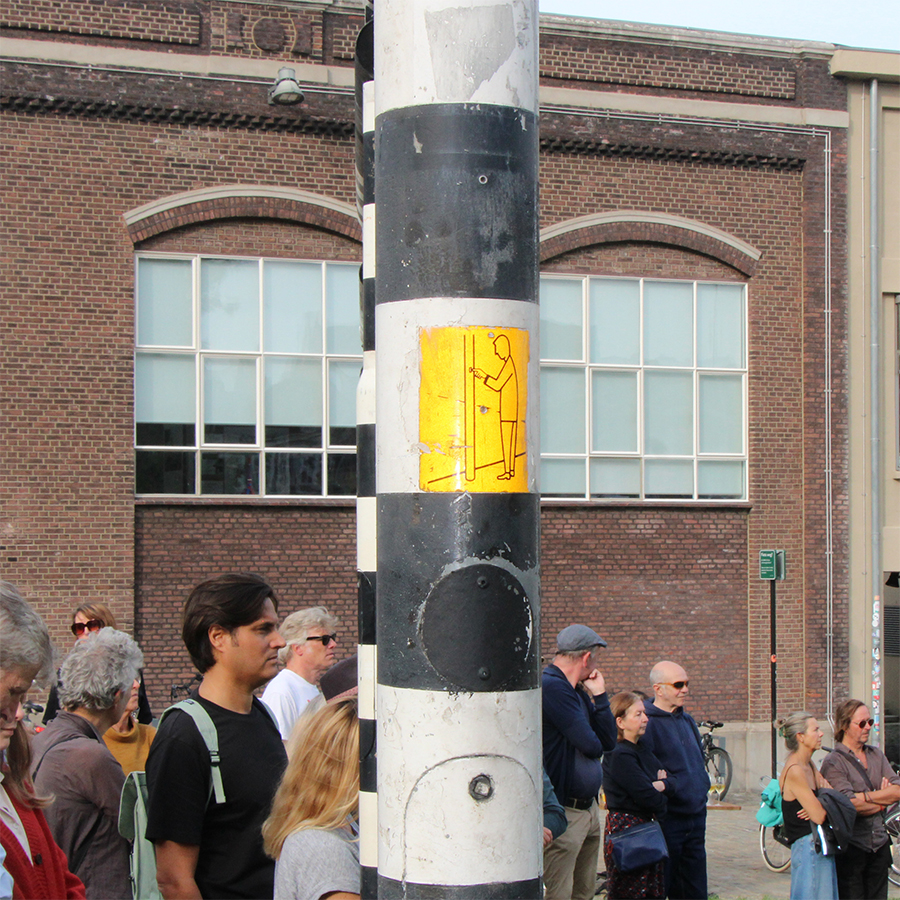
Zachtloper (the Soft Runner), oeuvre de Charlotte Lagro, est désormais installée en permanence à Maastricht dans le quartier du Sphinx. Sculpture de 33 mètres de long et de 3 mètres de haut réalisée à partir de pylônes de circulation, Zachtloper est une invitation pour les piétons et les institutions environnantes à se relier à l’espace, ainsi qu’à la sculpture elle-même. L’idée est née de la marche quotidienne de Charlotte Lagro entre son domicile et son atelier. J’ai grandi à Maastricht, explique l’artiste, et je visite souvent le quartier du Sphinx. J’ai travaillé comme bénévole au cinéma Lumière pendant de nombreuses années et j’ai connu toutes les phases de développement du quartier. L’œuvre a été réalisée à partir de pylônes de circulation qui m’ont été donnés par la municipalité et, de cette manière, je veux rendre l’œuvre à la ville et à la communauté. Zachtloper est un passage imaginaire qui dialogue avec l’urbanisme environnant, constitué de poteaux rayés noir et blanc, dépouillés de leur fonction initiale. Libéré de sa fonction et de son contexte quotidien, ce portique prend une forme paradoxale, à la fois cadre et objet, physiquement présent et pourtant immatériel.

Charlotte Lagro, Zachtloper (Soft Runner), intégration urbaine à Maastricht

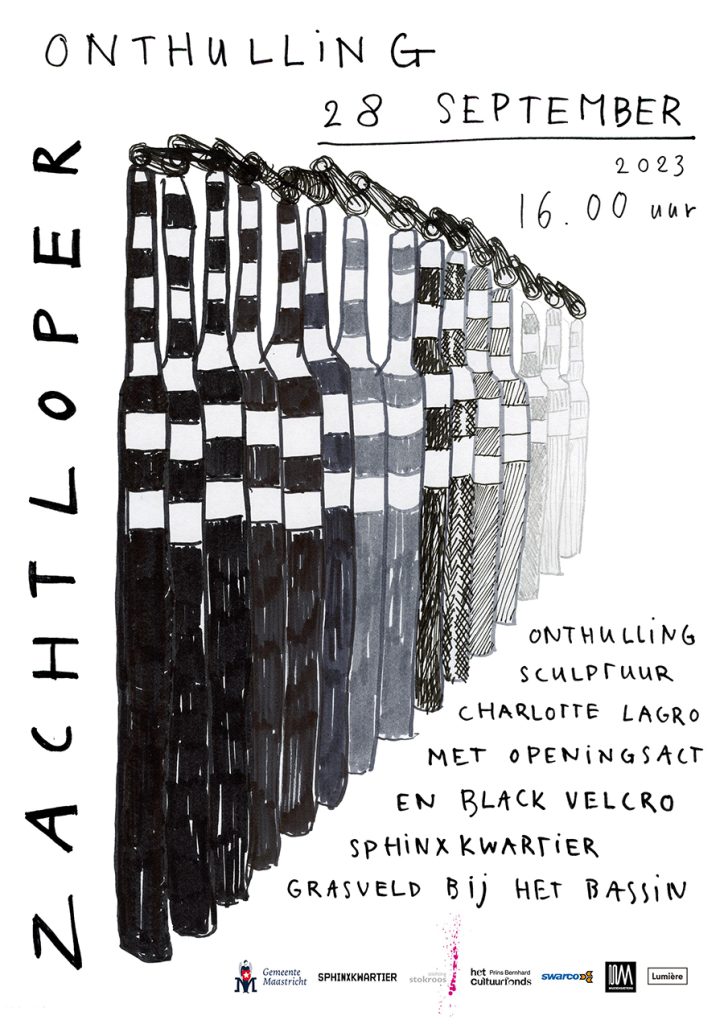
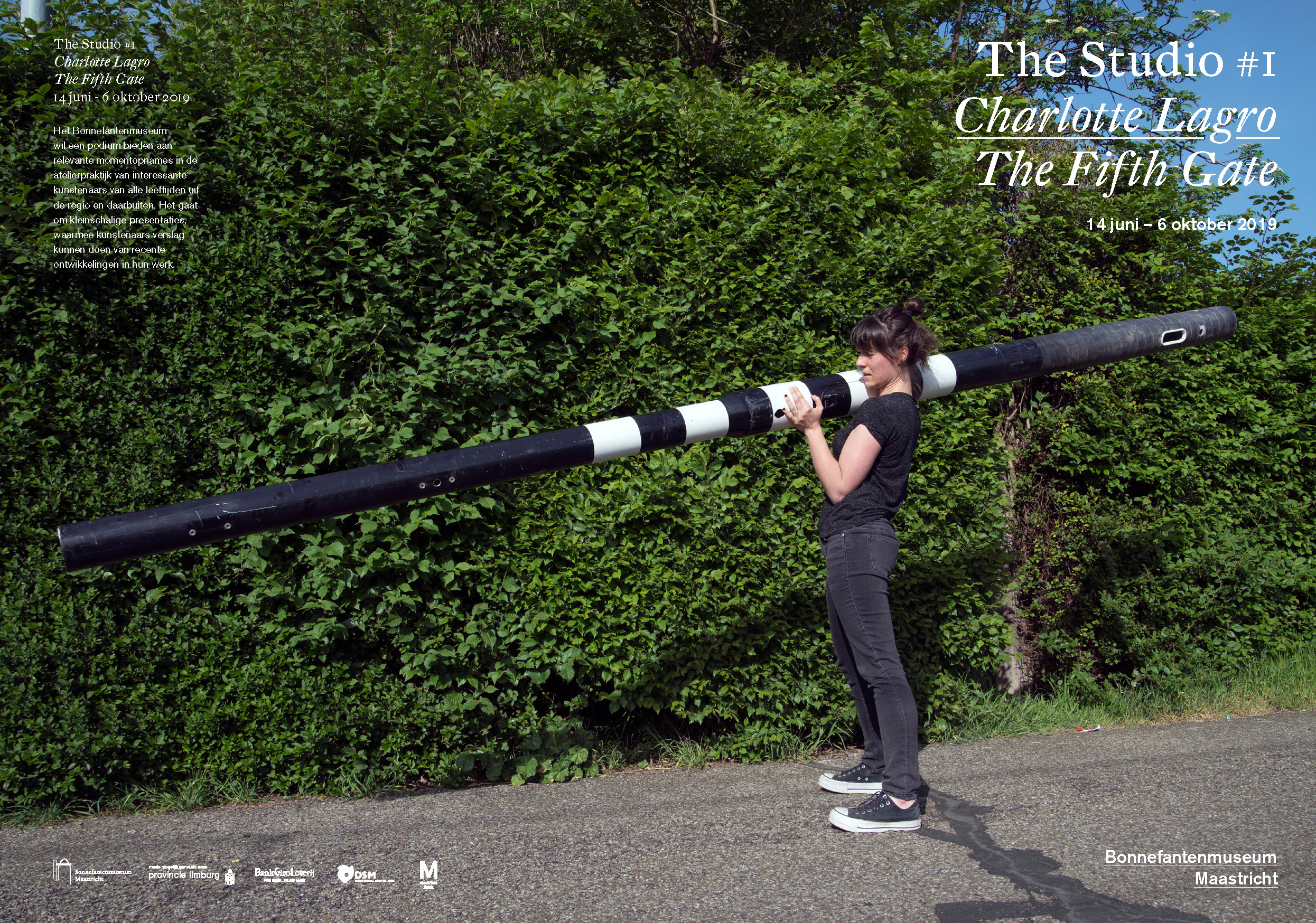
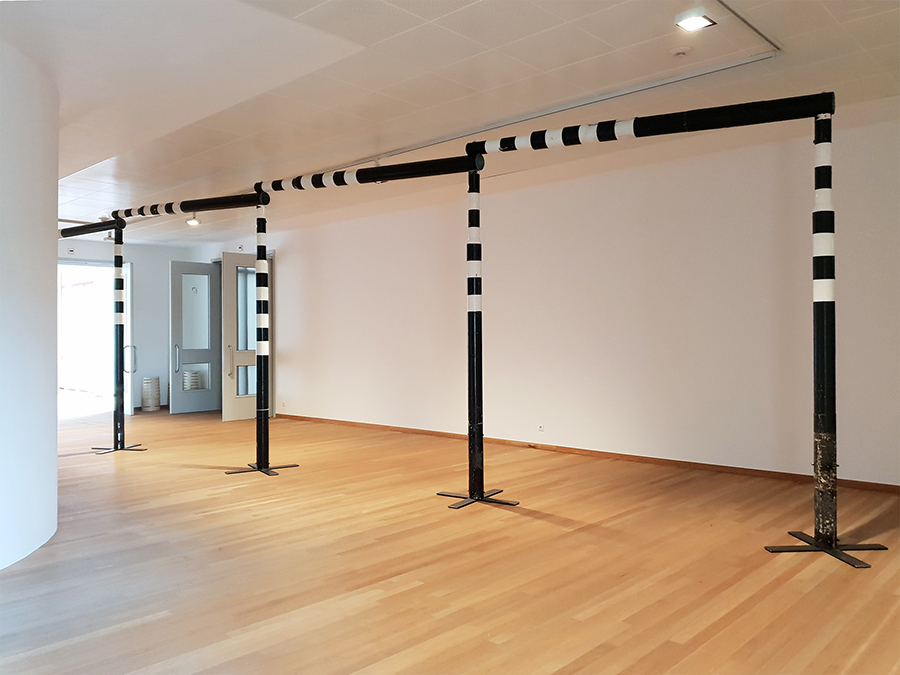
Zachtloper (the Soft Runner), oeuvre de Charlotte Lagro, est désormais installée en permanence à Maastricht dans le quartier du Sphinx. Sculpture de 33 mètres de long et de 3 mètres de haut réalisée à partir de pylônes de circulation, Zachtloper est une invitation pour les piétons et les institutions environnantes à se relier à l’espace, ainsi qu’à la sculpture elle-même. L’idée est née de la marche quotidienne de Charlotte Lagro entre son domicile et son atelier. J’ai grandi à Maastricht, explique l’artiste, et je visite souvent le quartier du Sphinx. J’ai travaillé comme bénévole au cinéma Lumière pendant de nombreuses années et j’ai connu toutes les phases de développement du quartier. L’œuvre a été réalisée à partir de pylônes de circulation qui m’ont été donnés par la municipalité et, de cette manière, je veux rendre l’œuvre à la ville et à la communauté.  Zachtloper est un passage imaginaire qui dialogue avec l’urbanisme environnant, constitué de poteaux rayés noir et blanc, dépouillés de leur fonction initiale. C’est une déclinaison d’une sculpture plus petite que Charlotte Lagro avait conçu en 2019 pour l’exposition The Studio #1 : Charlotte Lagro – The Fifth Gate au Bonnefantenmuseum de Maastricht  Inauguration ce jeudi 28 septembre à 16h.

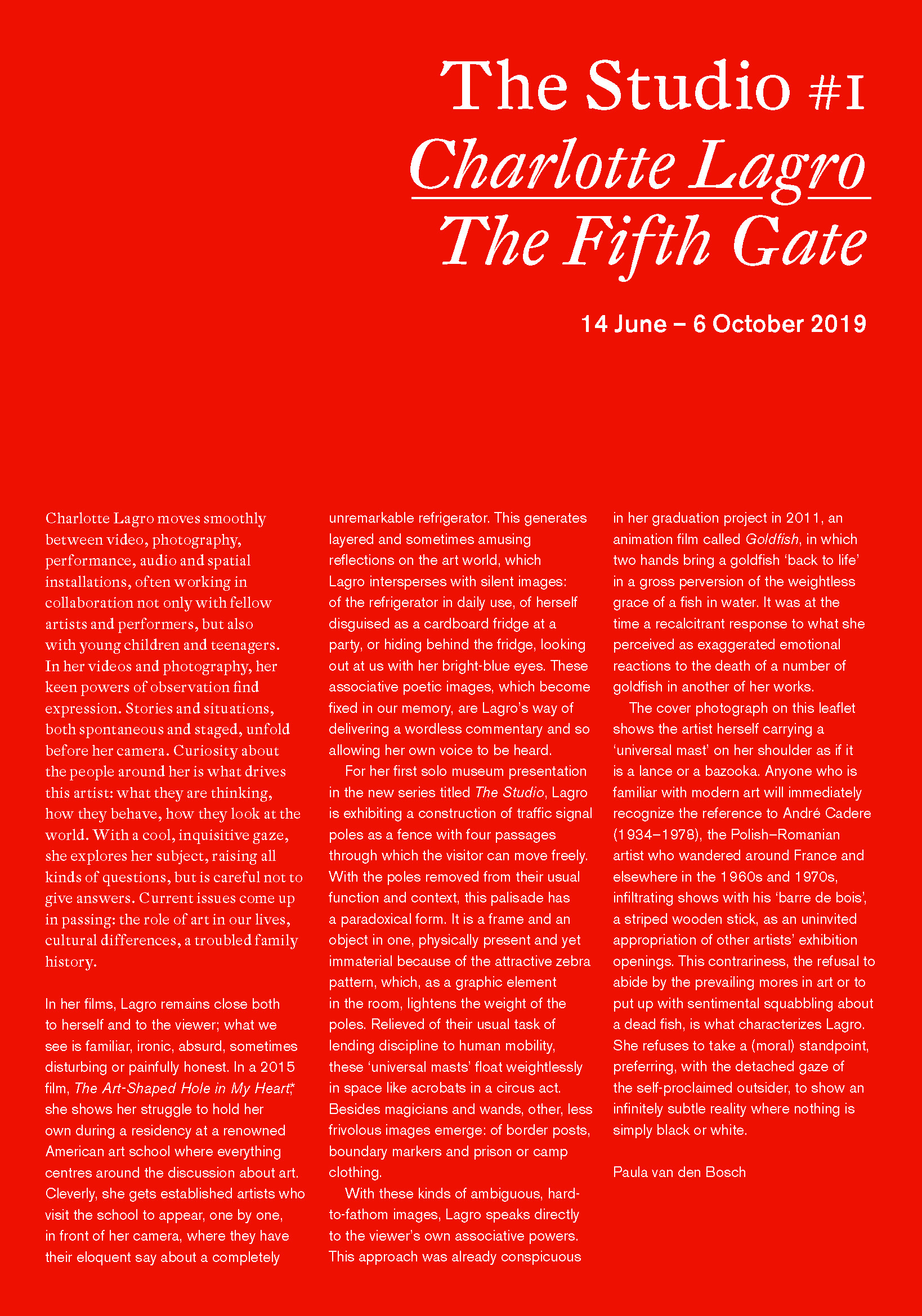
The Fifth Gate, est un portique constitué de poteaux de signalisation. Libéré de sa fonction et de son contexte quotidien, il prend une forme paradoxale, à la fois cadre et objet, physiquement présent et pourtant immatériel. 

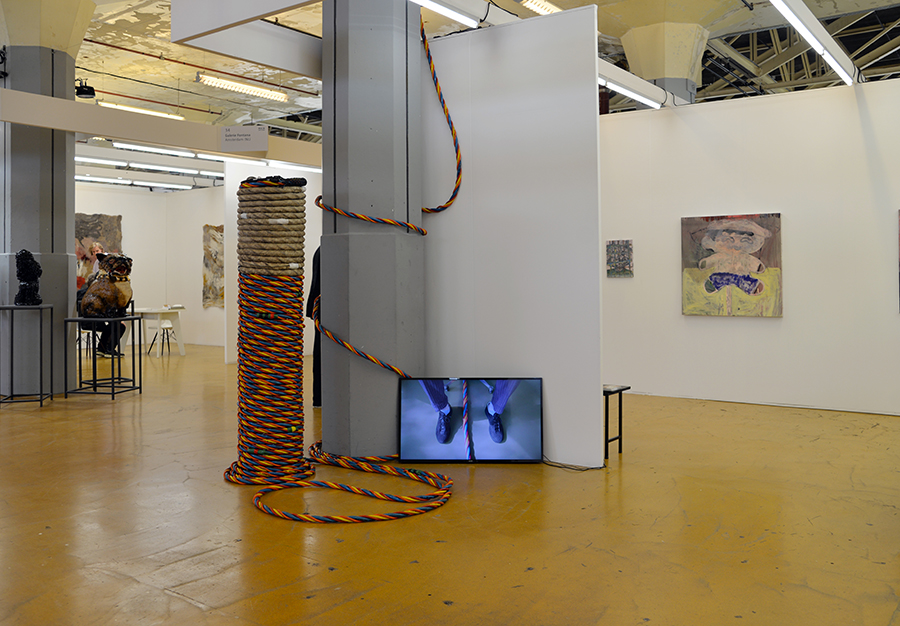
Art Rotterdam, les images (2)

Charlotte Lagro
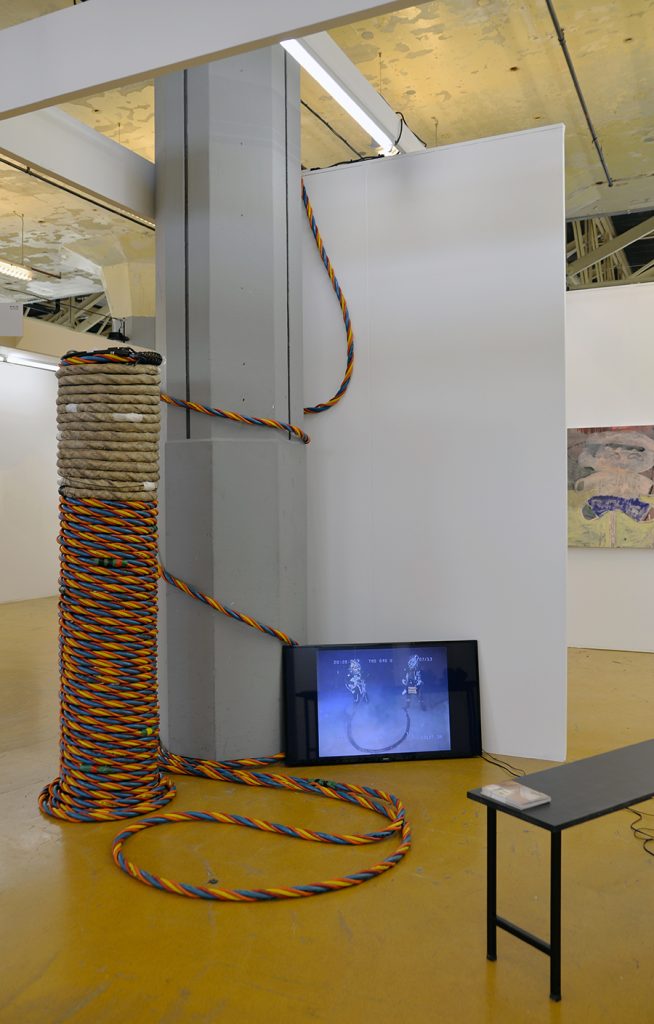
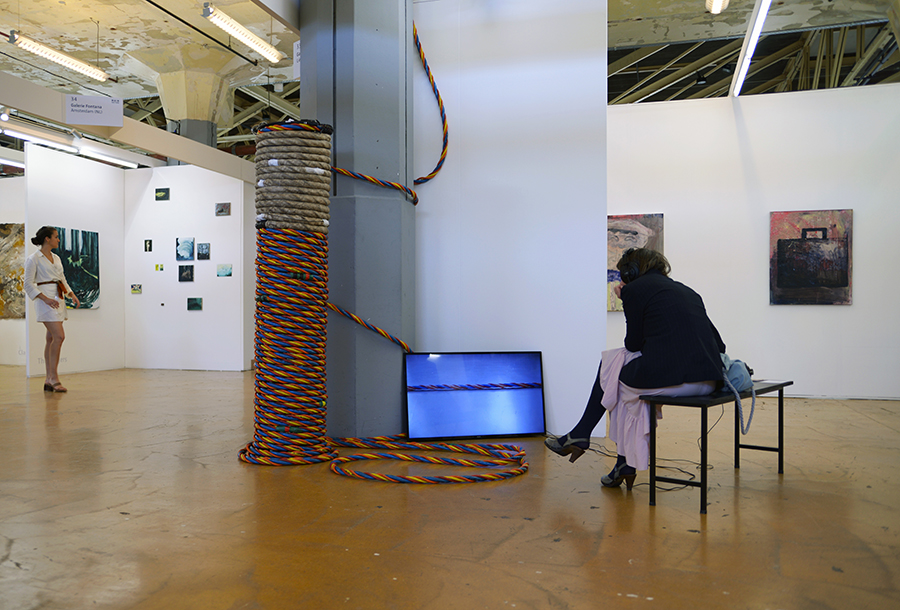
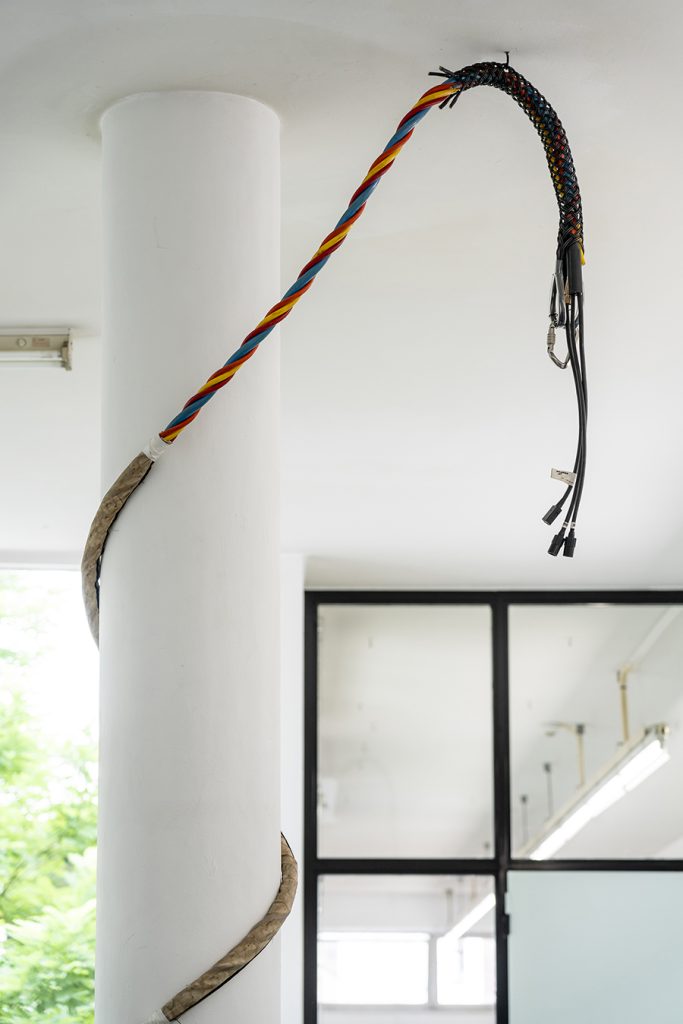
The Beginning and Ending is Always Ambiguous
installation with umbilical cable, rubber, metal, tape, copper, nylon, 120 meter.

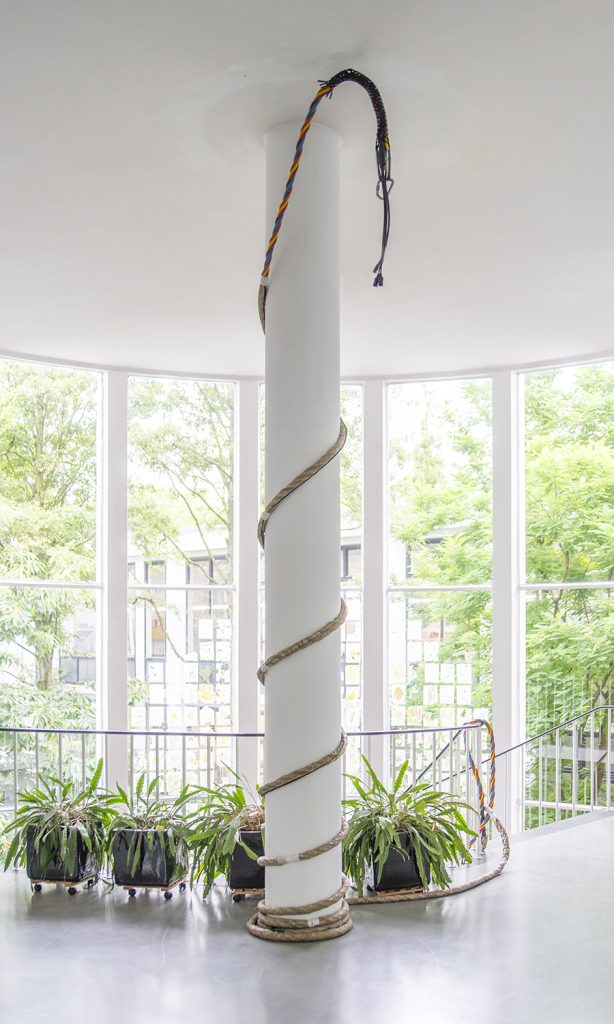
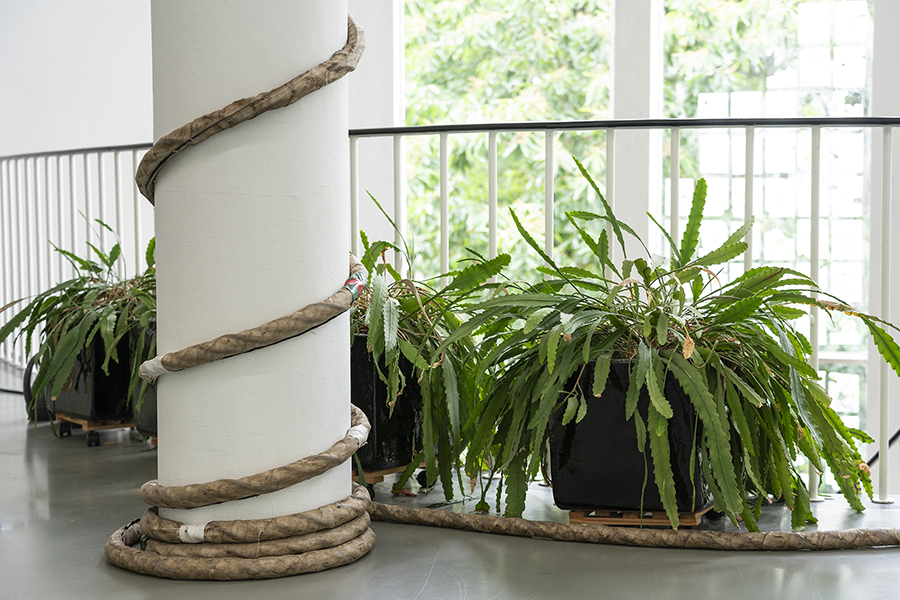
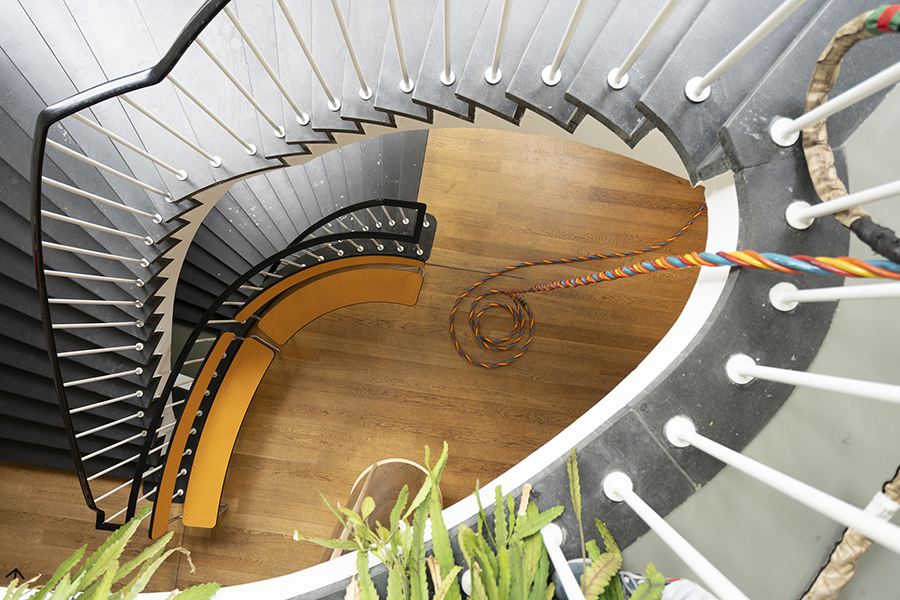
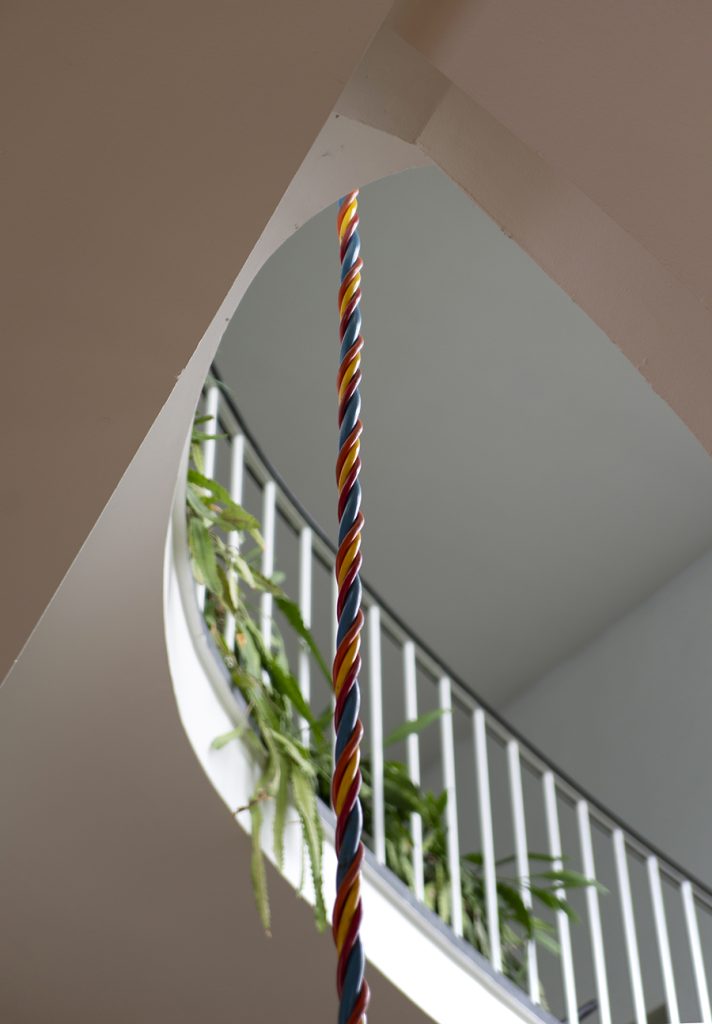
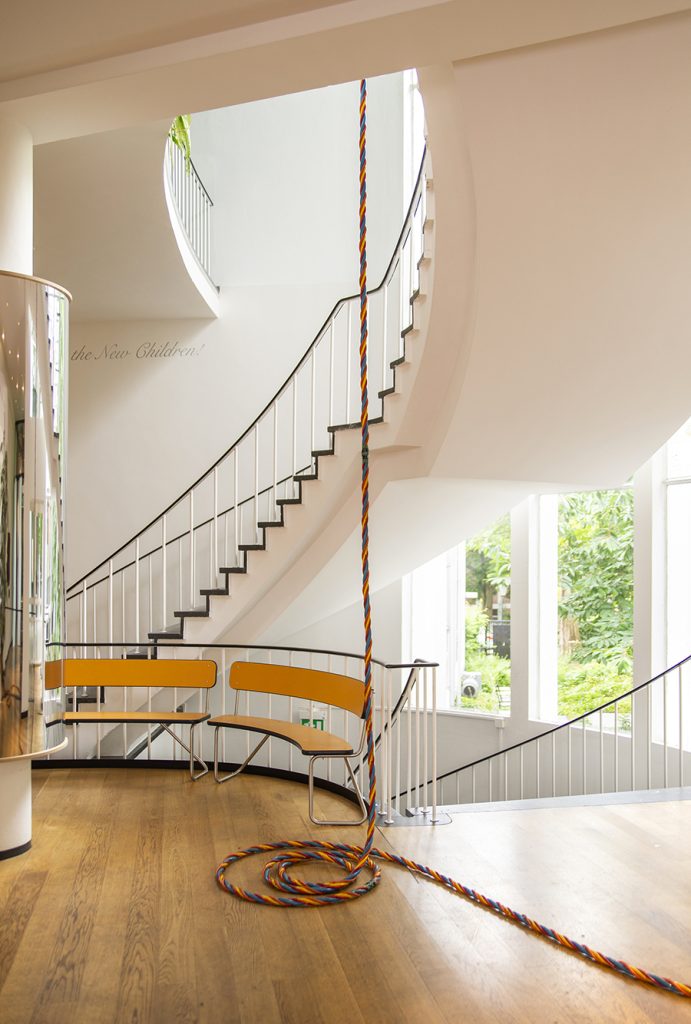
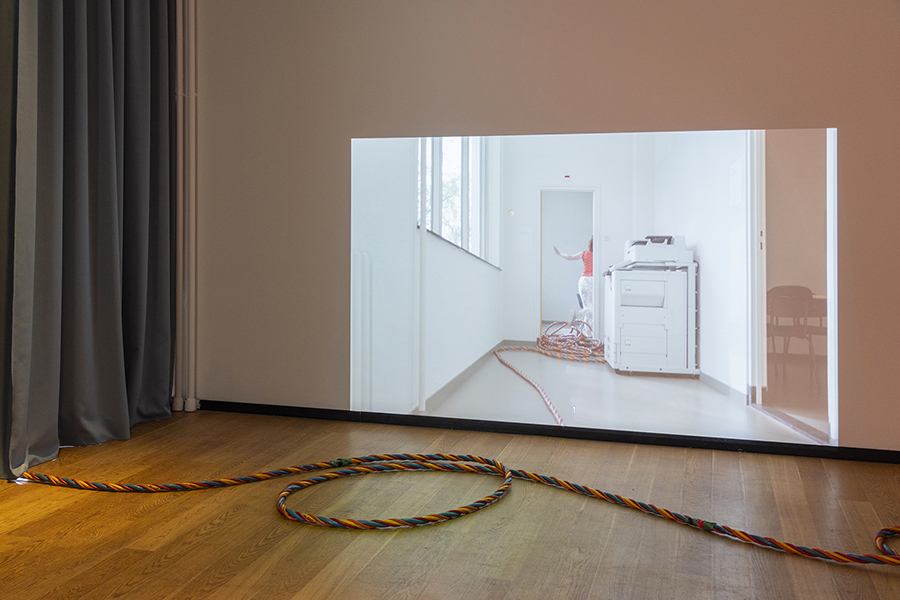
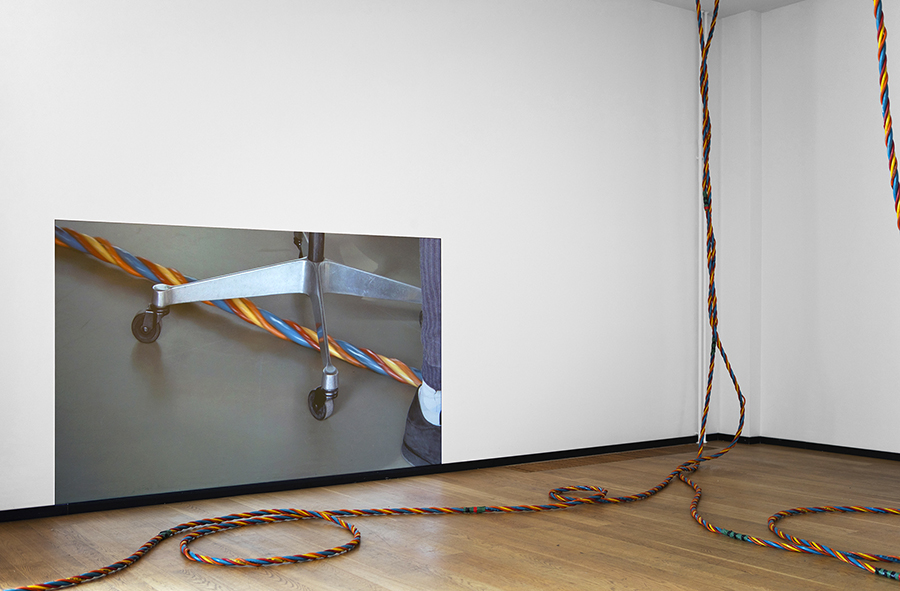
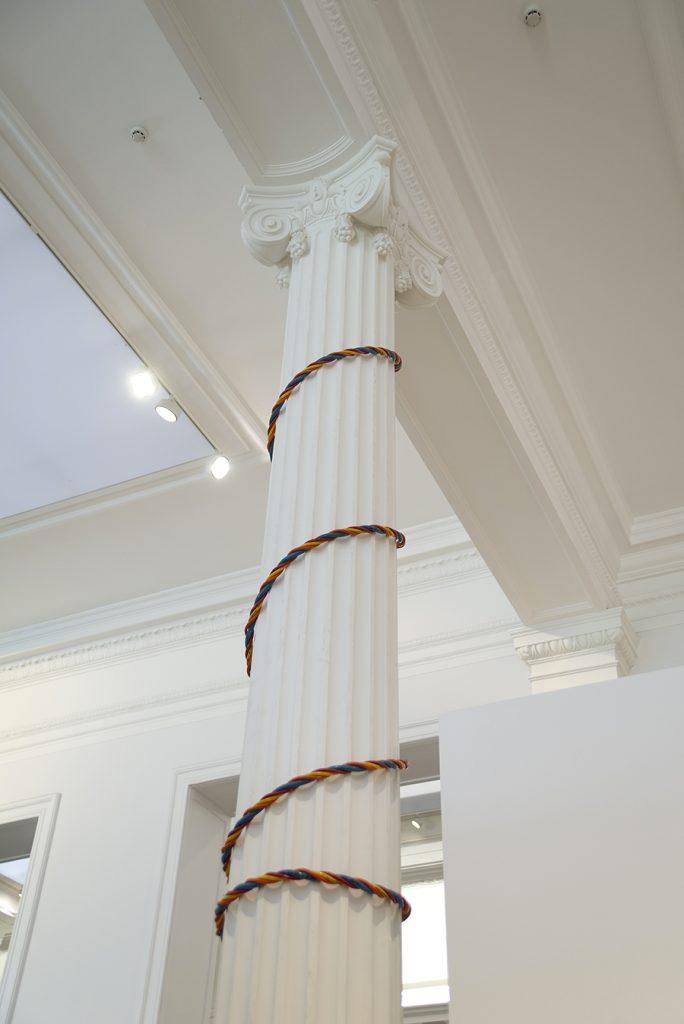
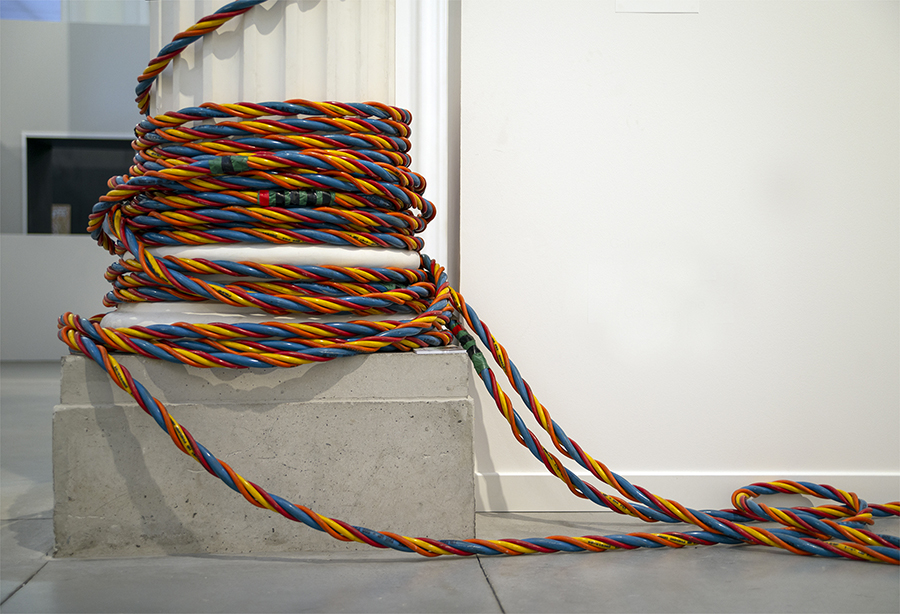
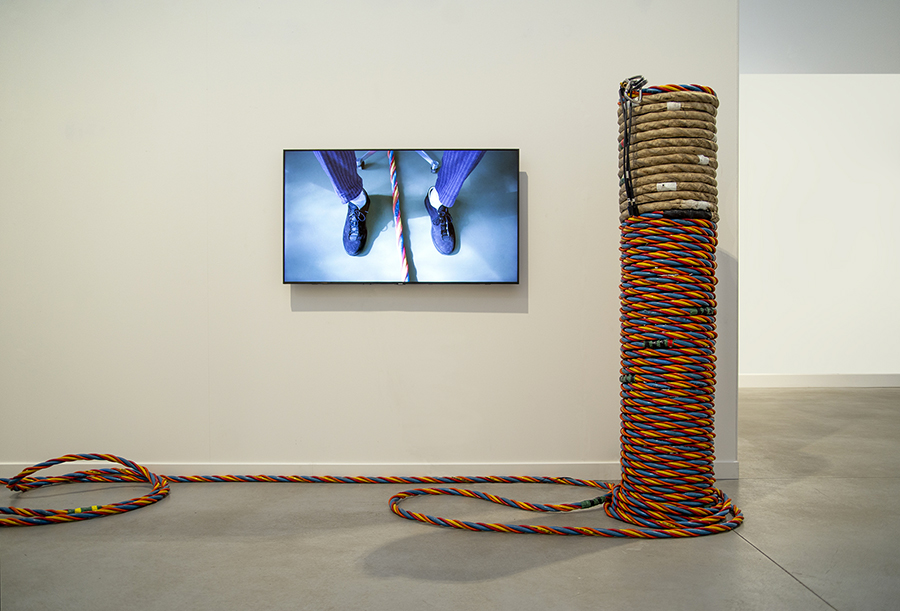
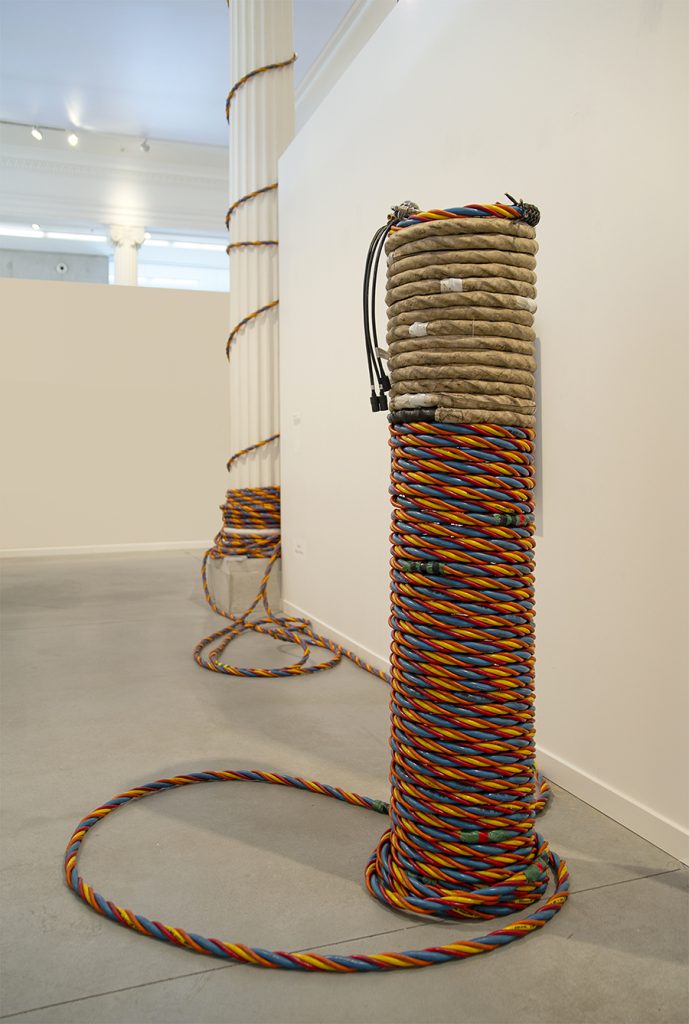
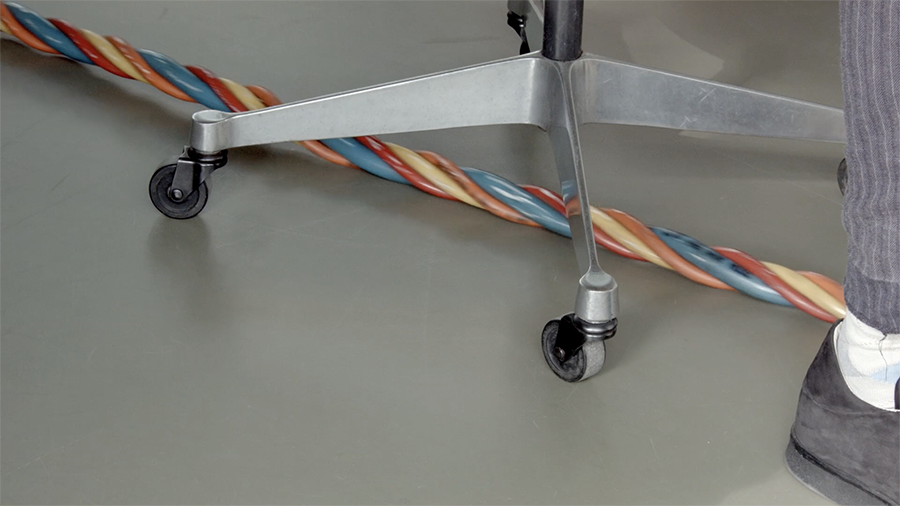
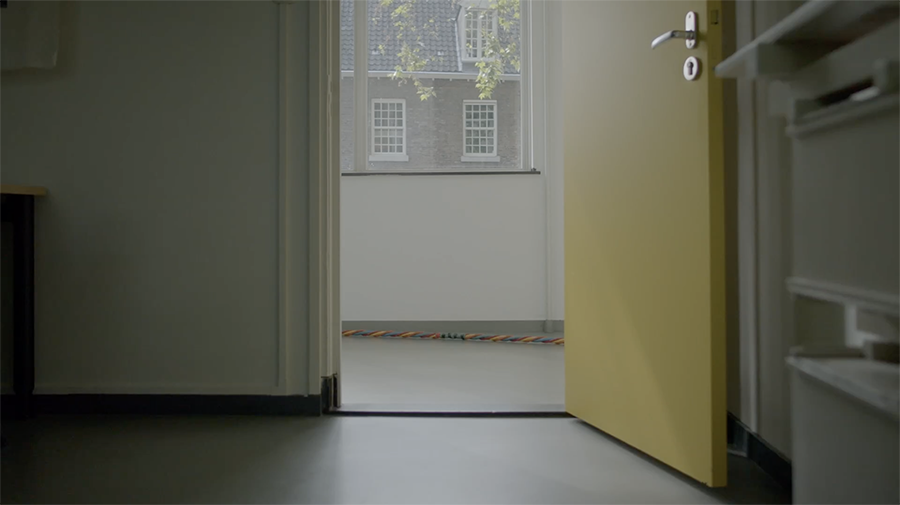
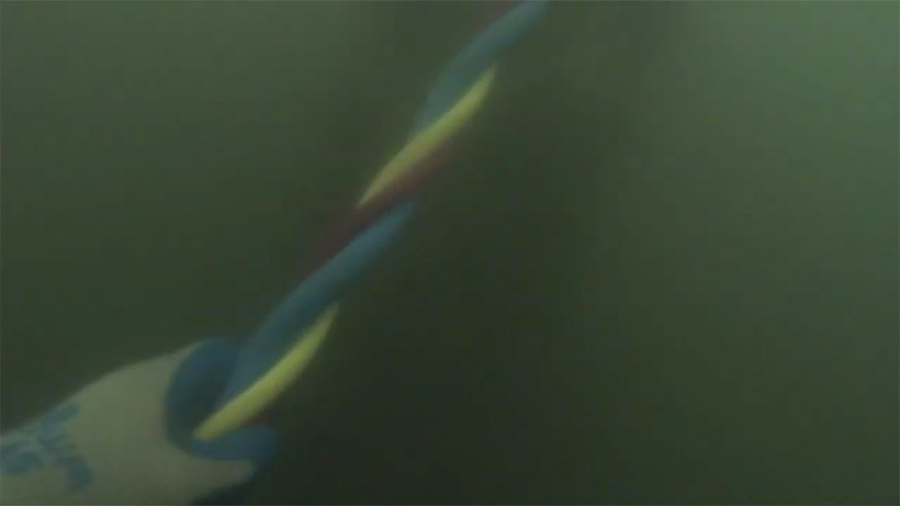
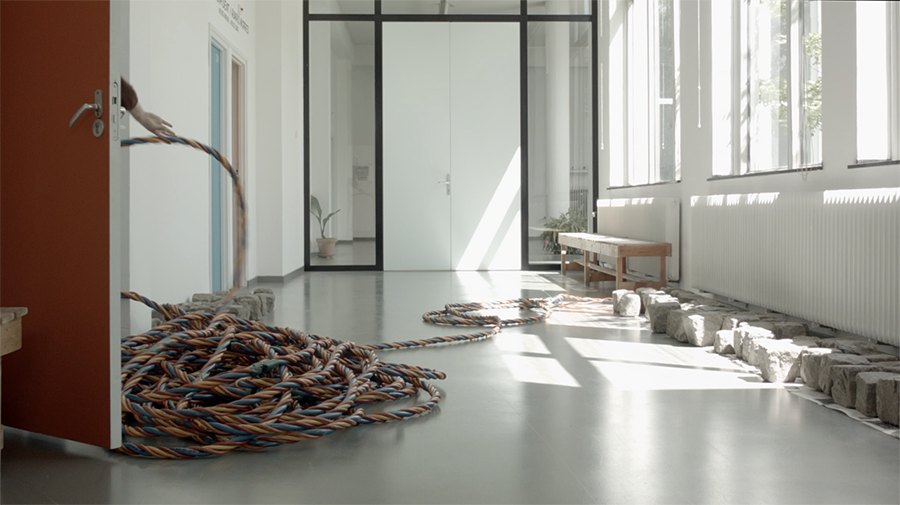
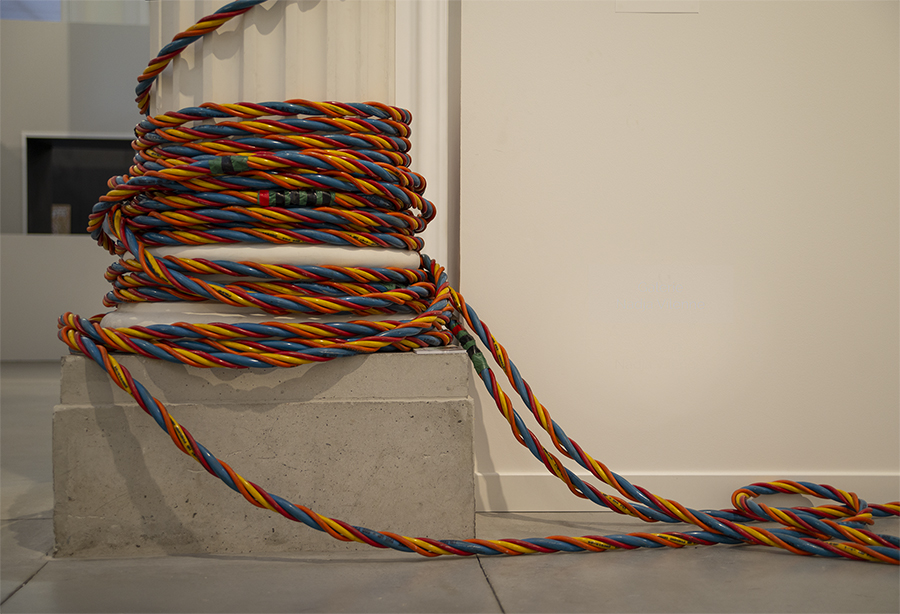
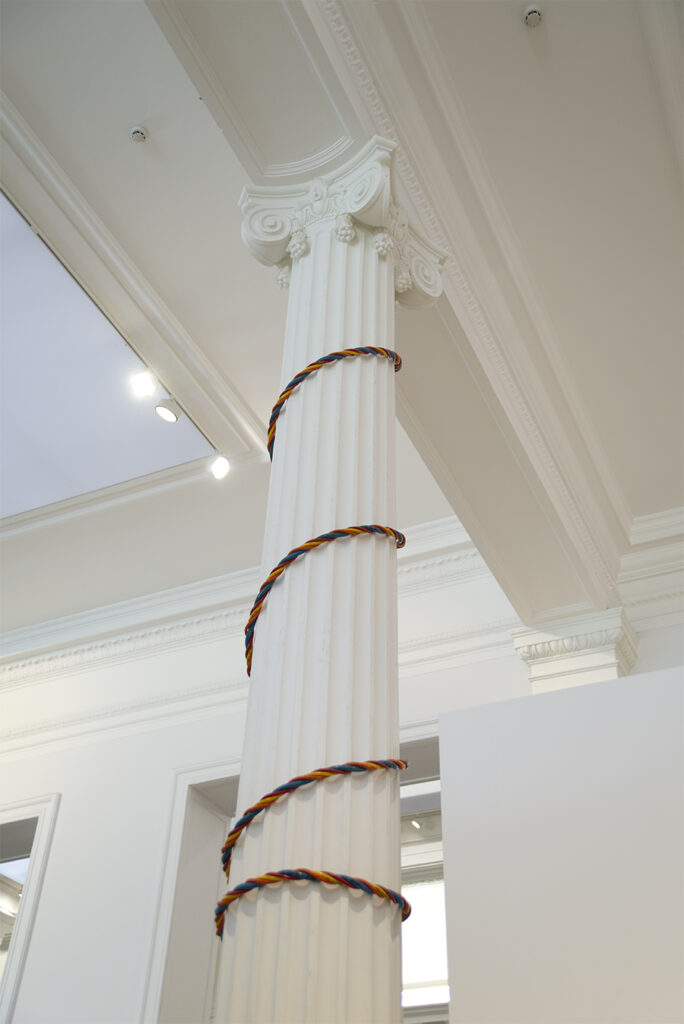
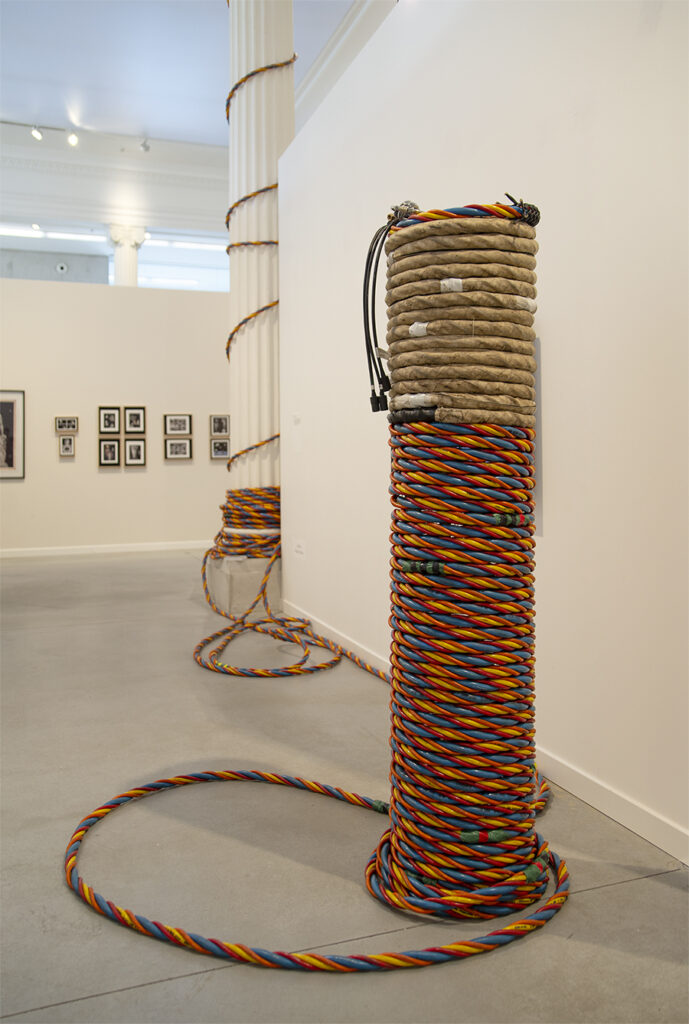
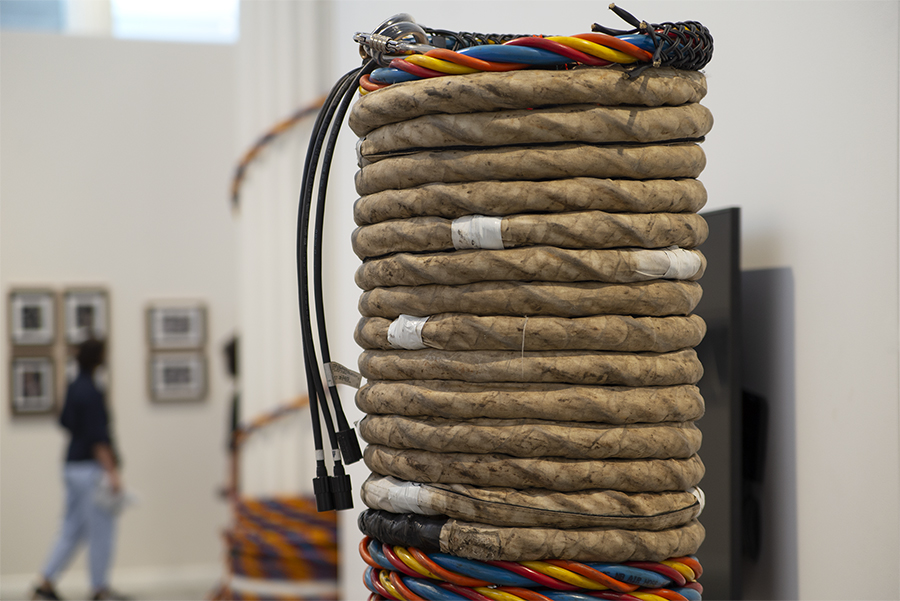
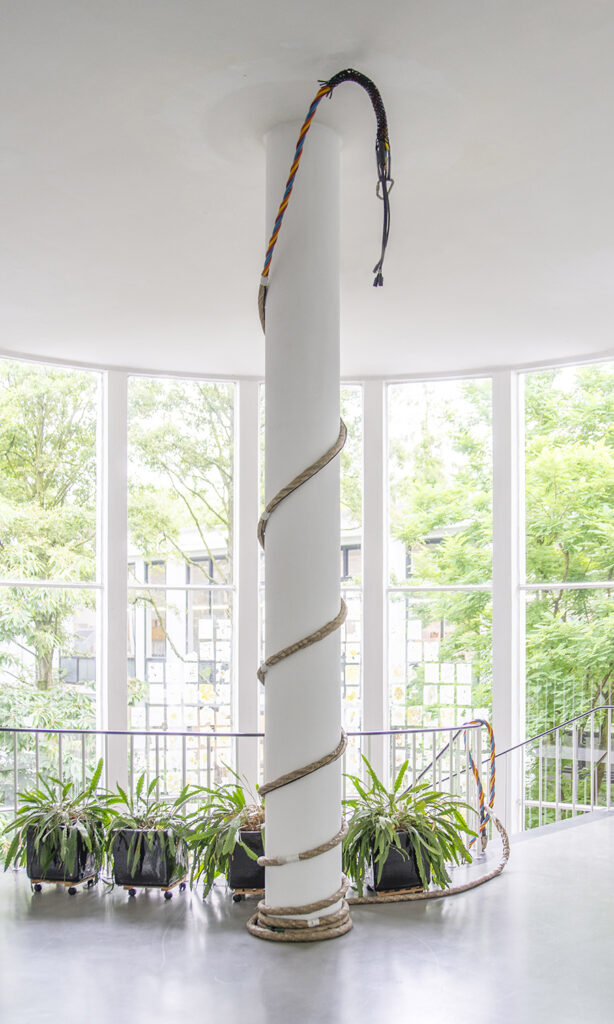
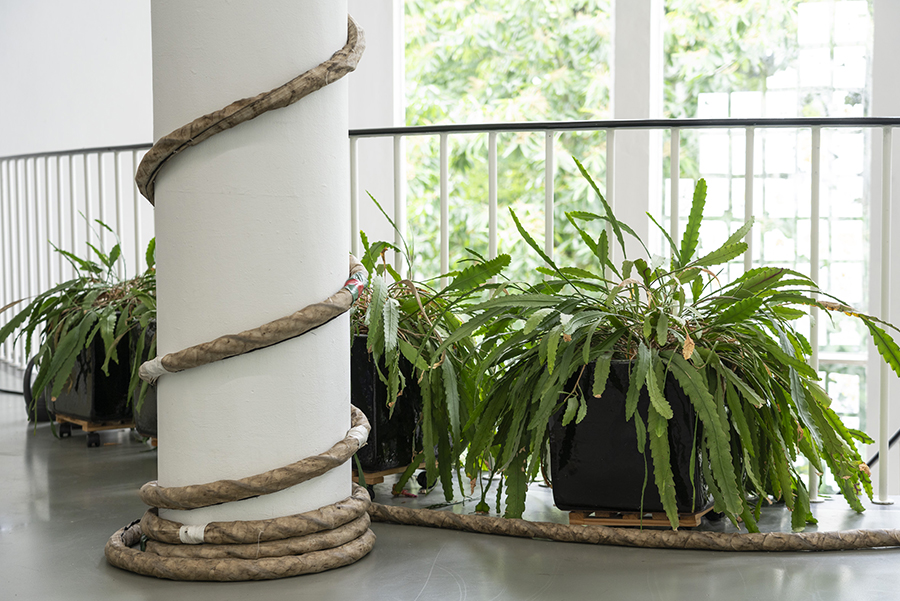
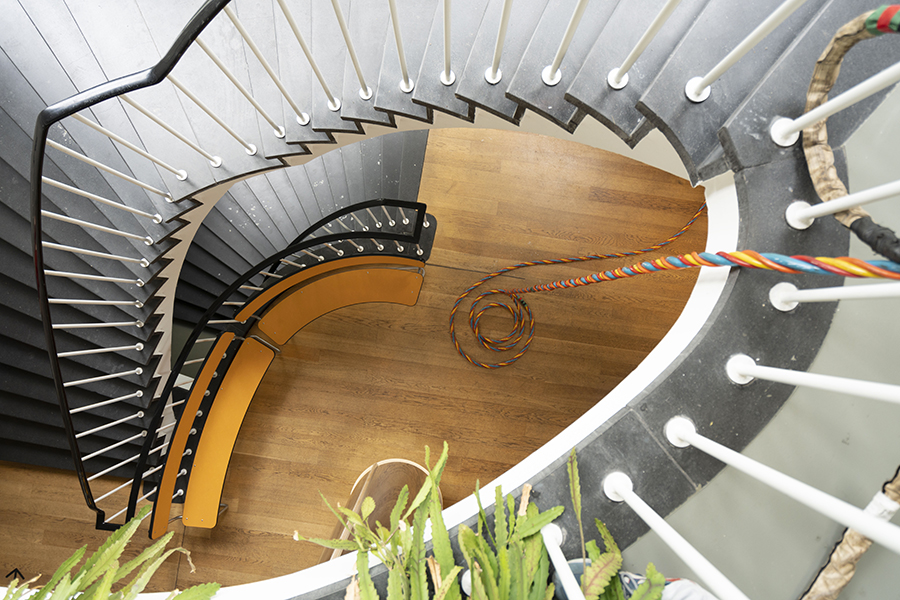
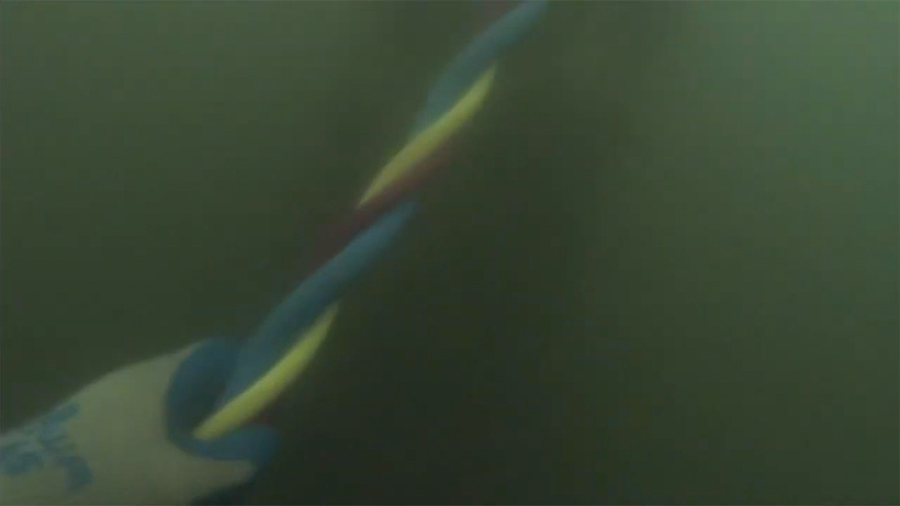
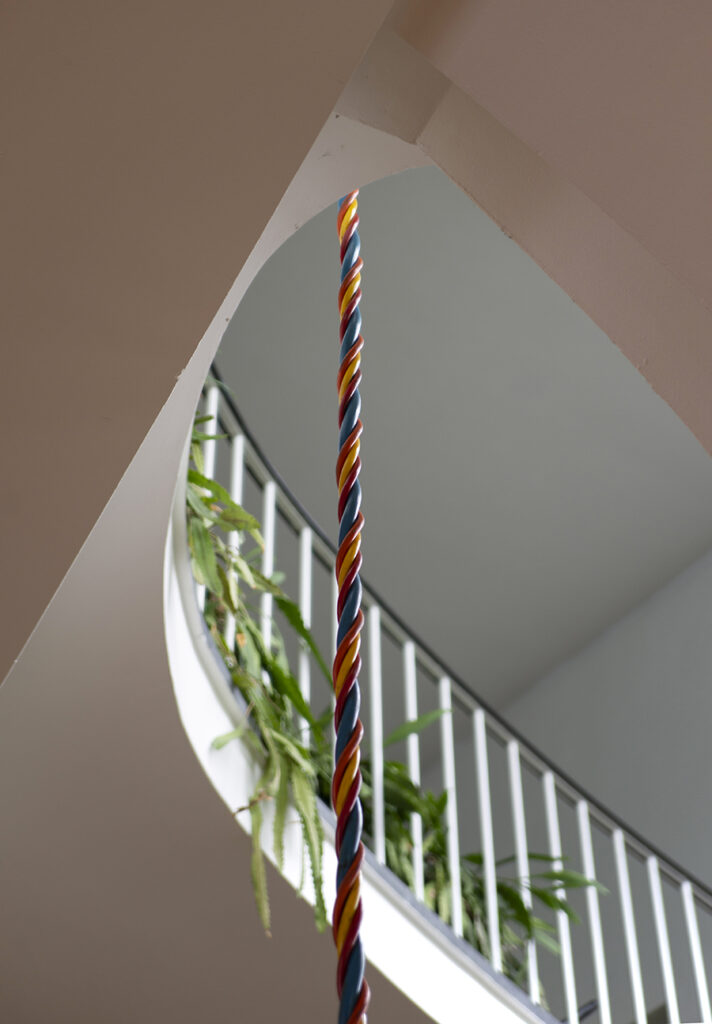
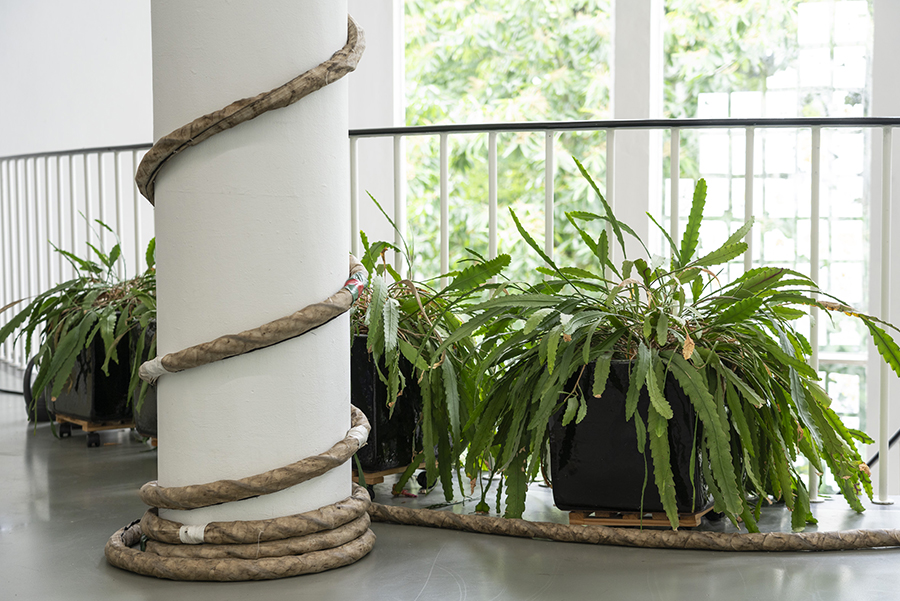
Charlotte Lagro takes found objects and relieves them of their intended purpose and function to accommodate new possibilities for exchange and desire. She strips them bare, plays with them and transforms them, and makes videos about them, often inviting others to join in the process. With sleight of hand, Lagro can make heavy objects appear almost weightless. The work “The Beginning and Ending is Always Ambiguous” centers around an umbilical cable used to supply oxygen, as well as light and communication signals, to deep sea divers. From a hundred meters below, divers climb the umbilical, hand over hand, to make their way back to the surface. In water, its air-filled tubes have just the right amount of added mass to gently sink. This artificial lifeline materializes the vulnerability of human existence. And the search for the familiar in the unfamiliar with handcrafted extensions. An optimistic relic of the human endeavor to the leave the bubble

photos : Charlotte Lagro

Charlotte Lagro, Art Rotterdam preview, The Beginning and Ending is Always Ambiguous

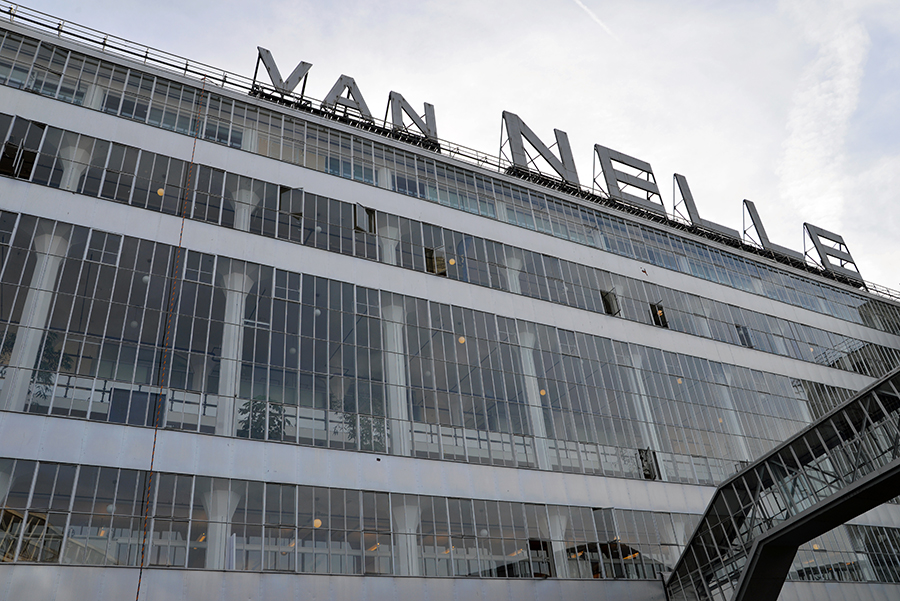
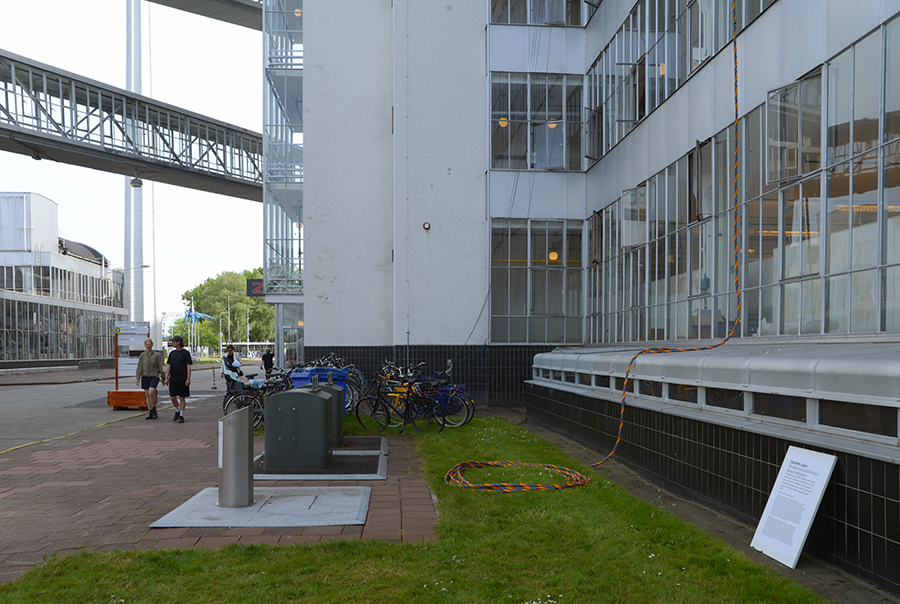
Lors de cette édition spéciale de printemps d’Art Rotterdam, dix-sept œuvres et installations monumentales seront exposées à l’extérieur de la Van Nellefabriek. Parmi celles-ci, The Beginning and Ending is Always Ambiguous, oeuvre de Charlotte Lagro.

Installation with umbilical cable, rubber, metal, tape, copper, nylon, 120 meter.
Installation view at Jan van Eyck Academy Open Studios, Maastricht

NL.

Charlotte Lagro werkt met gevonden objecten en bevrijdt deze van hun beoogde functie om ruimte te maken voor nieuwe mogelijkheden voor uitwisseling en verlangen. Ze stript de voorwerpen, speelt ermee en transformeert ze, maakt er video’s over, en nodigt vaak anderen uit deel te nemen aan dit proces. Met lichte toets laat Lagro zware objecten bijna gewichtloos aandoen. Het werk “The Beginning and Ending is Always Ambiguous” focust op de umbilical (navelstreng), een kabel die wordt gebruikt om diepzeeduikers van zuurstof, licht- en communicatiesignalen te voorzien. Vanaf honderd meter diep klimmen duikers aan deze kabel, hand voor hand, terug omhoog naar de oppervlakte. In het water bevatten de met lucht gevulde slangen precies genoeg ballast om rustig weg te zinken. Deze artificiële levenslijn materialiseert de kwetsbaarheid van het menselijk bestaan. En de zoektocht naar het vertrouwde in het onvertrouwde met geknutselde extensies. Een optimistisch reliek van het menselijk streven om de luchtbel te verlaten.

FR.

Charlotte Lagro travaille avec des objets trouvés, les libérant de leur fonction pour laisser place à de nouvelles possibilités d’échange et de désir. Elle dépouille les objets, joue avec eux et les transforme, réalise des vidéos à leur sujet et invite souvent d’autres personnes à participer à ce processus. Avec une touche de légèreté, Lagro fait paraître des objets pesants presque en apesanteur. L’œuvre « The Beginning and Ending is Always Ambiguous » (Le début et la fin sont toujours ambigus) se concentre sur le cordon ombilical, un câble utilisé pour fournir de l’oxygène, de la lumière et des signaux de communication aux plongeurs en eaux profondes. De cent mètres de profondeur, les plongeurs remontent à la surface sur ce câble, une main après l’autre. Dans l’eau, les tuyaux remplis d’air contiennent juste assez de lest pour leur permettre de couler sans problème. Cette ligne de vie artificielle matérialise la vulnérabilité de l’existence humaine. Et la recherche du familier dans le non familier avec des extensions bricolées. Une relique optimiste de l’effort humain pour quitter la bulle.

EN.

Charlotte Lagro takes found objects and relieves them of their intended purpose and function to accommodate new possibilities for exchange and desire. She strips them bare, plays with them and transforms them, and makes videos about them, often inviting others to join in the process. With sleight of hand, Lagro can make heavy objects appear almost weightless. The work “The Beginning and Ending is Always Ambiguous” centers around an umbilical cable used to supply oxygen, as well as light and communication signals, to deep sea divers. From a hundred meters below, divers climb the umbilical, hand over hand, to make their way back to the surface. In water, its air-filled tubes have just the right amount of added mass to gently sink. This artificial lifeline materializes the vulnerability of human existence. And the search for the familiar in the unfamiliar with handcrafted extensions. An optimistic relic of the human endeavor to the leave the bubble

Installation with umbilical cable, rubber, metal, tape, copper, nylon, 120 meter.
Installation view at Jan van Eyck Academy Open Studios, Maastricht
The Beginning and Ending is Always Ambiguous, 2021
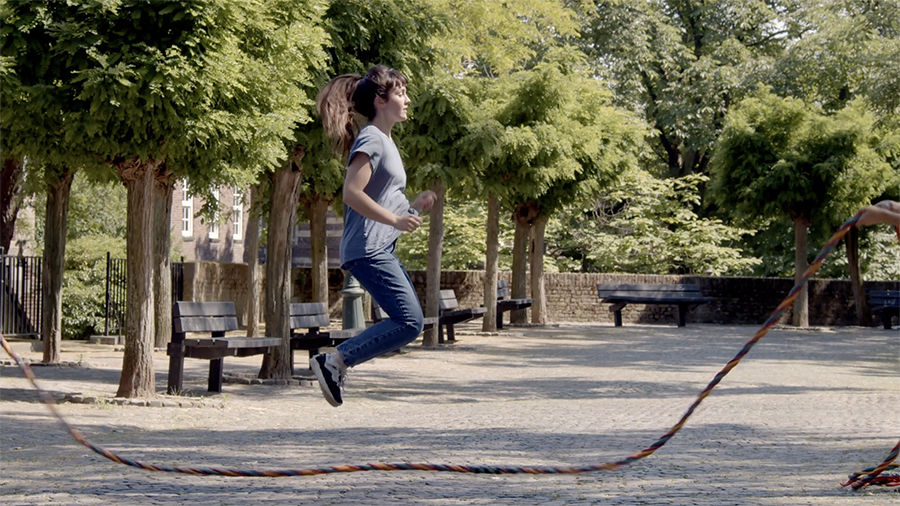
Video 4K, 04:44 min. Color. Sound.

Charlotte Lagro, En Piste, La Boverie, Liège, les images

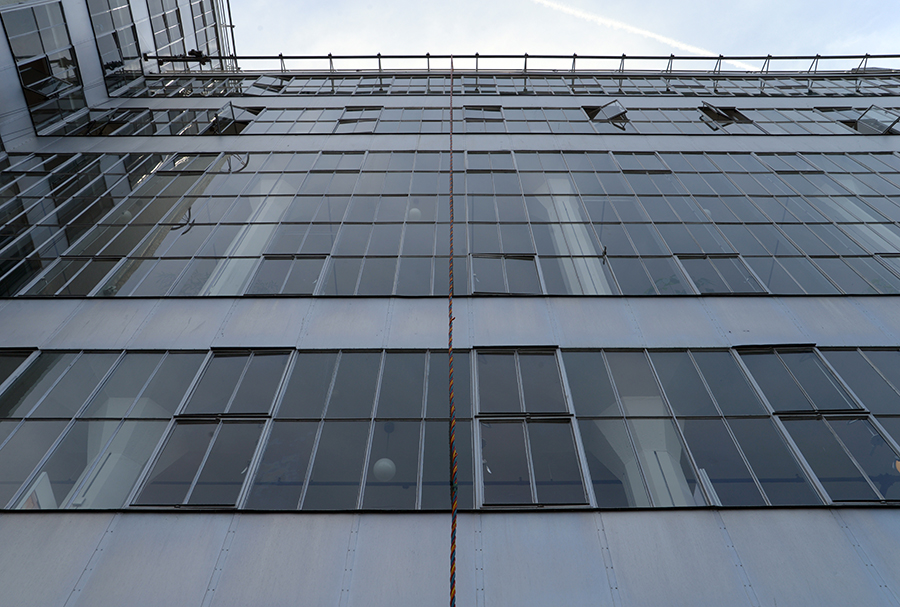
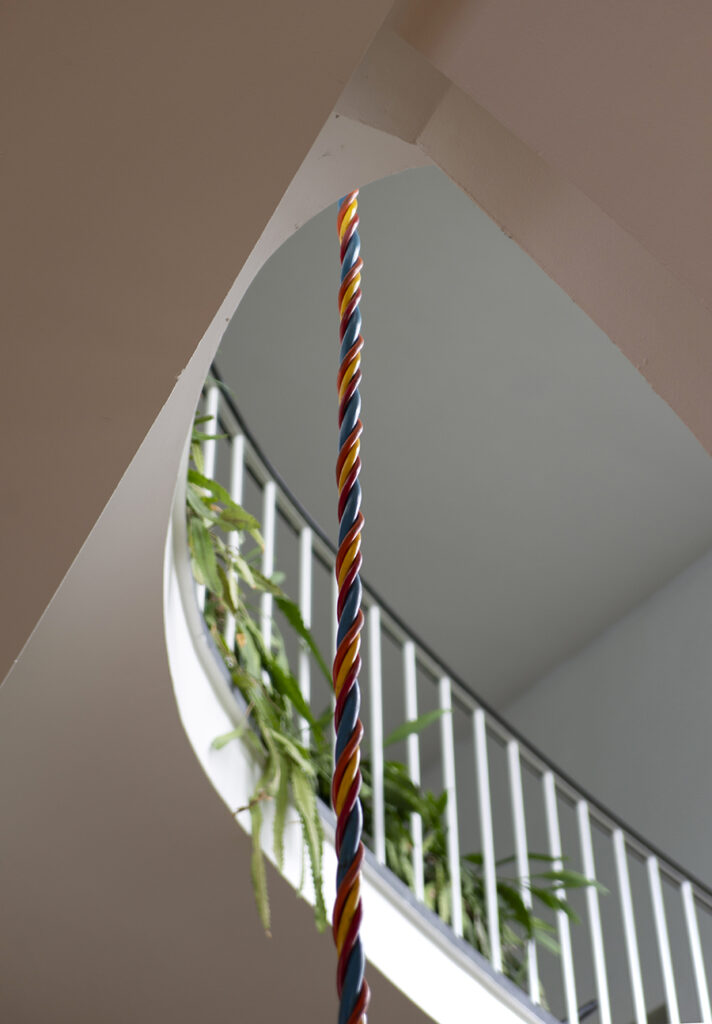
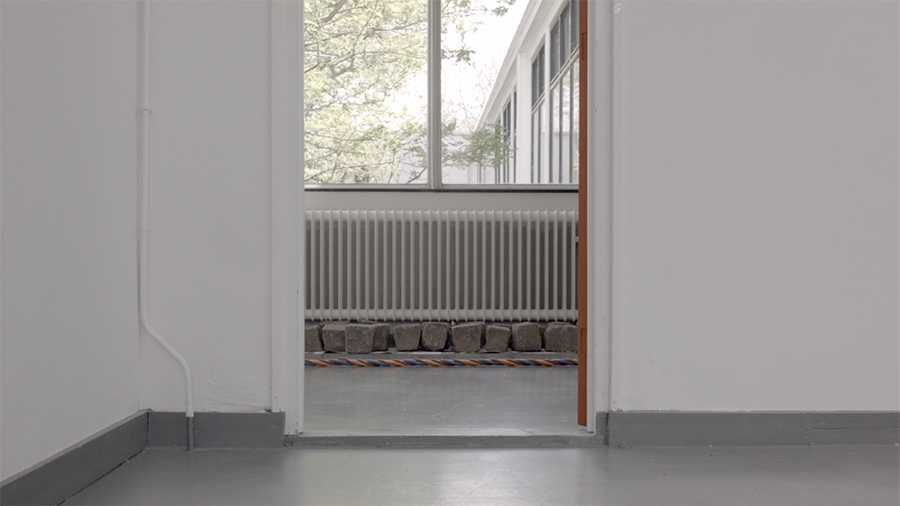
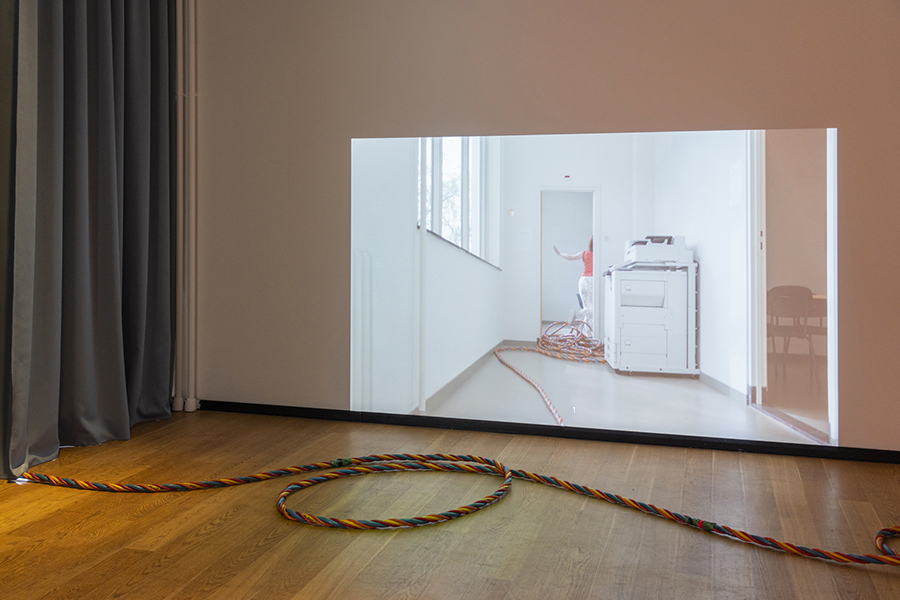
The Beginning and Ending is Always Ambiguous centers around an umbilical cable used to supply oxygen, as well as light and communication signals, to deep sea divers. From a hundred meters below, divers climb the umbilical, hand over hand, to make their way back to the surface. In water, its air-filled tubes have just the right amount of added mass to gently sink. Out of water, the cable is less at ease. It twists and twirls in all directions. To hold one is to wrestle with it. The 115-meter-long cable is comprised of bright blue, red, orange, and yellow tubes, like veins entwined. (It is a snake of mythical proportions.) This hallowed lifeline makes visceral the fragility of our bodies and the precarity of wedding them to machines. If something goes wrong, it goes terribly wrong.

Video 4K, 04:44 min. Color. Sound.
Installation with umbilical cable, rubber, metal, tape, copper, nylon, 120 meter

[sociallinkz]
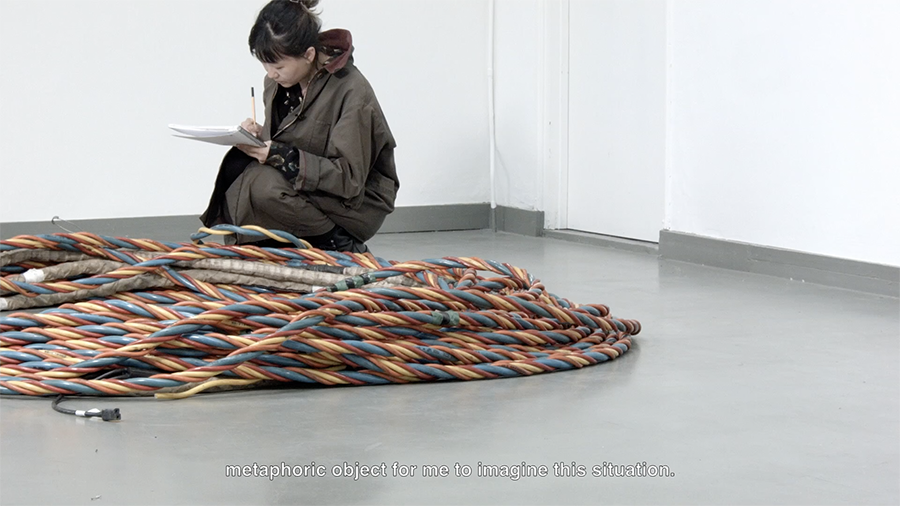
Charlotte Lagro, The Beginning and Ending is Always Ambiguous, En Piste ! Musée de la Boverie, Liège, preview

The Beginning and Ending is Always Ambiguous centers around an umbilical cable used to supply oxygen, as well as light and communication signals, to deep sea divers. From a hundred meters below, divers climb the umbilical, hand over hand, to make their way back to the surface. In water, its air-filled tubes have just the right amount of added mass to gently sink. Out of water, the cable is less at ease. It twists and twirls in all directions. To hold one is to wrestle with it. The 115-meter-long cable is comprised of bright blue, red, orange, and yellow tubes, like veins entwined. (It is a snake of mythical proportions.) This hallowed lifeline makes visceral the fragility of our bodies and the precarity of wedding them to machines. If something goes wrong, it goes terribly wrong.

Video 4K, 04:44 min. Color. Sound.
Installation with umbilical cable, rubber, metal, tape, copper, nylon, 120 meter.

[sociallinkz]
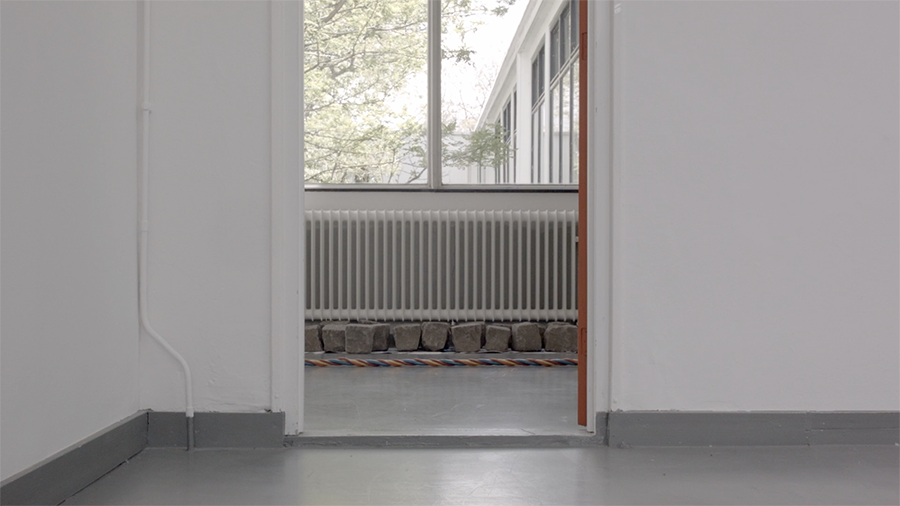
Charlotte Lagro, The Beginning and Ending is Always Ambiguous, En Piste ! Musée de la Boverie, Liège

Dans le cadre de En Piste 2021, la galerie Nadja Vilenne a le plaisir de vous inviter à découvrir l’installation vidéo  de Charlotte Lagro : 

The Beginning and Ending is Always Ambiguous

Liège, Musée de la Boverie. Du 27 août, 10h, au 5 septembre 2021, 18h. 

Toujours au musée de la Boverie, aux même dates : 

  • Xiaochuan WANG. Espace Jeunes Artistes.Exposition du 5 août au 3 octobre 2021
  • Loïc Moons participe à l’exposition du Prix de la Création 2020 de la Ville de Liège. Du 27 août au 5 septembre 2021.

[sociallinkz]
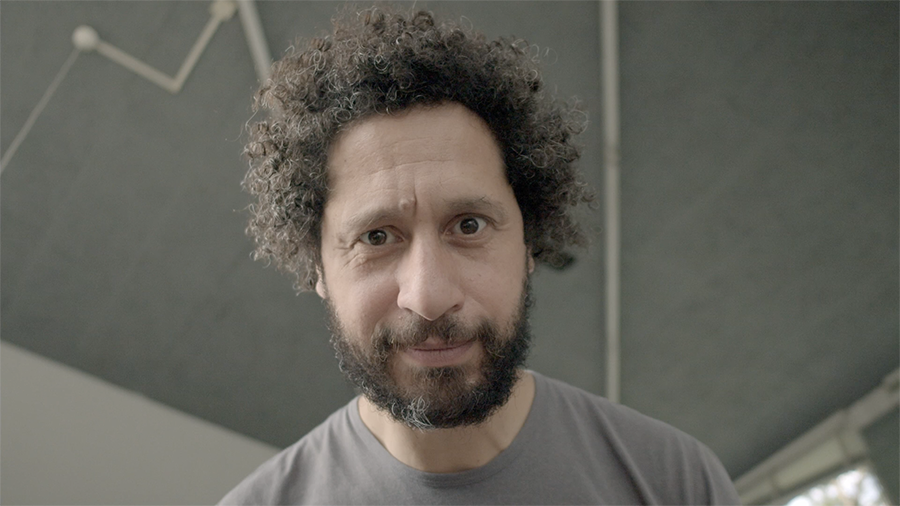
Charlotte Lagro, De Geschiedenis is voorbij, Gouvernement aan het Maas, Maastricht, vernissage ce jeudi 6 février

Charlotte Lagro. The Day the Clown Cried, 2015. Double channel, loop, HD video, colour, sound, 00:10:40

Trio d’artistes invités au Gouvernement aah het Maas, à l’initiative de la Province du Limbourg : Roger Cremers, Charlotte Lagro,  Marta & Slava. De geschiedenis is voorbij, Metamorphose van de herinnering.  Exposition du 6 février au 12 juin 2020. Vernissage ce jeudi 6 février à 17h30. Performance du mime danseur Dönci Bánki qui collabora avec Charlotte Lagro à la réalisation du film « The Day the Clown Cried ».  Plus d’information à propos de cette oeuvre 

[sociallinkz]